Verdict Box
Albert Park is not the suburb you choose because you want a cheap 2026 budget. You choose it because you are prepared to pay for short tram rides, bay access, Albert Park Lake, period streets, schools nearby, and a village rhythm that can reduce weekend driving. The catch is simple: the savings are mostly lifestyle savings, not cash savings.
For a single renter, the workable budget usually depends on finding a one-bedroom unit or older apartment and resisting the habit of treating every walk down Bridport Street or Victoria Avenue as a small transaction. For a couple, Albert Park can feel more rational because two incomes can split the rent premium while both people benefit from walkability and public transport. For a family, the suburb becomes a serious weekly commitment unless housing is already solved, because three-bedroom homes and larger period stock push the rent line into a category where one budget mistake can crowd out savings.
The honest local verdict: Albert Park suits people who value time, schools, parks and bay access enough to accept a thinner buffer. It does not suit households trying to cut expenses aggressively in 2026. If your goal is maximum space per dollar, look west, north or further south. If your goal is a compact inner bayside week with less car dependence, Albert Park earns its premium, but only when the rent line is under control.
At-a-Glance Table
| Budget item | Single renter | Couple | Family with 1-2 children |
|---|---|---|---|
| Rent pressure | High | High but shareable | Very high for houses |
| Groceries | Moderate to high | Moderate to high | High |
| Eating out | Easy to overspend | Easy to overspend | Weekend treat cost adds up |
| Transport | Lower if tram-first | Lower if one car | Parking and sport trips matter |
| Utilities | Standard inner-city range | Standard inner-city range | Higher in older homes |
| Car costs | Optional for some | One car is common | Often one car minimum |
| Budget risk | Rent and cafes | Rent and lifestyle creep | Rent, childcare, car, sport |
A realistic weekly spend before discretionary shopping can sit roughly around $900-$1,250 for a single renter, $1,500-$2,100 for a couple, and $2,400-$3,600 for a family renting a larger home. These are planning ranges, not promises. The exact number changes quickly with lease type, car ownership, childcare, debt repayments, private health insurance and how often you use the suburb’s cafes and restaurants.
Albert Park’s budget profile is unusual because it can remove some transport costs while adding pressure elsewhere. A tram-first renter may save on fuel, tolls and parking. A family in a draughty period home may hand those savings back through heating, maintenance-style extras, and the larger grocery-and-activity load that comes with children.
Who It Suits
The Tram-First Professional - wants a short city commute, can live without a daily car, and would rather pay rent than lose hours on the road.
Priya, 36, Budget-Watching Parent - wants parks, primary school access and weekend walks, but needs the rent number to leave room for childcare and groceries.
The Downsizing Local - has sold or left a larger bayside home and wants village convenience without maintaining a big block.
The Coffee-Walk Regular - uses Albert Park Lake, the foreshore and local cafes often enough that the suburb’s lifestyle premium is actually used, not just admired.
Rent & Property Reality
The property reality is blunt. Realestate.com.au’s Albert Park profile showed median property prices over the year to April 2026 around $2.41 million for houses and $848,500 for units, with median weekly rents around $993 for houses and $620 for units. It also listed one-bedroom unit rent around $533 per week and two-bedroom unit rent around $668 per week for the same period. Check the current figures before signing because thin listing volumes can swing medians fast: realestate.com.au Albert Park profile.
That means the main budget decision is not whether Albert Park is expensive. It is whether you can choose the least damaging version of expensive. A one-bedroom unit can work for a high-earning single who is disciplined with food, transport and nights out. A two-bedroom unit is often the couple sweet spot, especially if both people use the tram and neither needs a large home office. A house is where the budget becomes less forgiving. Period terraces and larger family homes are scarce enough that inspections can feel competitive even when the broader market cools.
Buying is a separate conversation. Low rental yields tell you investors are not buying Albert Park purely for income. They are paying for land, scarcity, location, heritage character and long-term demand. For renters, that means landlords may be asset-rich but yield-sensitive; rent rises can still arrive when mortgages, insurance, owners corporation costs or land tax pressure the owner.
Older housing stock also matters. A charming terrace can carry winter heating costs, limited storage, older windows and awkward parking. A newer apartment may be cheaper to run but can trade off outdoor space. Before committing, inspect heating, cooling, ventilation, storage, noise transfer, bin access and parking restrictions with the same seriousness as the rent.
The budget move is to calculate Albert Park backwards. Start with your savings target, then rent, then unavoidable bills, then food, then transport. If the number left for life is too thin, the suburb will feel punitive within three months.
Local Reality & Pockets
Albert Park has several budget personalities packed into a small area. Around Bridport Street and Victoria Avenue, daily convenience is strongest. You can walk to coffee, groceries, restaurants, pharmacy-style errands and the tram. That convenience is the reason many people tolerate smaller homes, but it is also where incidental spending is easiest. A $6 coffee, a pastry, a takeaway dinner and a top-up shop can turn a low-car lifestyle into a high-leakage budget.
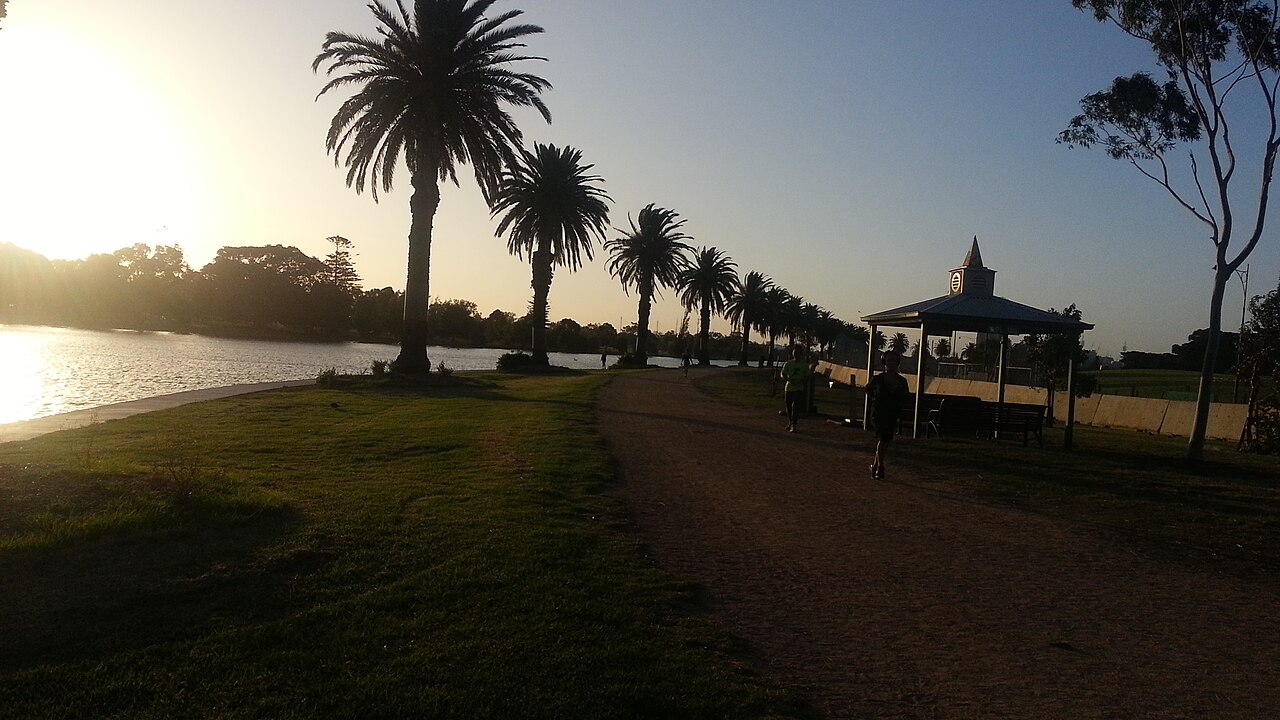
Closer to Albert Park Lake, the value is recreation. Running, walking, golf, team sport and dog exercise can replace paid fitness for some residents. Parks Victoria’s Albert Park material shows the scale of the precinct, including sporting grounds, picnic areas, toilets, playgrounds, dog off-lead areas, parking zones and tram stops: Parks Victoria Albert Park map. This is where Albert Park can genuinely lower spending if you use public space instead of paid activities.
Near the Middle Park edge, the feel becomes quieter and more residential, but the budget does not suddenly relax. You are still paying for inner bayside scarcity and school-adjacent demand. Near South Melbourne, access to Clarendon Street, South Melbourne Market and employment clusters improves, but traffic and parking pressure can be more noticeable.
Grand Prix disruption is a local budget and logistics factor. It is not a reason to avoid the suburb by itself, but residents near the lake need to plan around event-season access, noise, road changes and visitor traffic. If you work from home, have small children, or rely on predictable car access, ask locals and property managers exactly how your street behaves during major events.
Parking is the other everyday reality. Some homes have excellent off-street parking. Others have none. A household that assumes street parking will be effortless can end up paying with time, fines, stress and awkward visitor logistics. If you can go car-light, Albert Park becomes more affordable. If you need two cars, the suburb is less kind.
Signature Craving
The signature Albert Park craving is a morning walk that ends at Dundas & Faussett on Dundas Place. It is a real local anchor: a long-running cafe and restaurant at 111 Dundas Place, known for coffee, all-day breakfast and a day-to-night rhythm. It works because it sits inside the way people actually use Albert Park: walk the lake, drift through the village, meet a friend, sit outside when the weather behaves.
Budget-wise, this is both the charm and the trap. Albert Park’s food scene is not just destination dining; it is convenience dining. You are rarely far from a coffee, brunch, wine, takeaway or bakery stop. That makes the suburb feel generous on a Saturday and quietly expensive by the end of the month.
For a single renter, the practical rule is to set a weekly local-spend cap. For a couple, decide which meals are social and which are routine. For a family, keep cafe visits attached to specific rituals rather than using them as default entertainment. The suburb gives you plenty of free or low-cost anchors: lake loops, beach walks, playgrounds, sport, picnic areas and tram trips. The budget only breaks when every outing picks up a receipt.
The good news is that Albert Park’s paid pleasures are easy to moderate because the free ones are strong. A coffee after a long walk is different from brunch, takeaway and drinks in the same day. That difference is the line between enjoying Albert Park and being financially worn down by it.
Comparisons Table
| Suburb | Budget feel in 2026 | Rent/property pressure | Best fit | Watch-out |
|---|---|---|---|---|
| Albert Park | Premium inner bayside, walkable, low-car possible | High for units, very high for houses | Couples, professionals, established families | Rent leaves less buffer |
| Middle Park | Similar bayside prestige, often quieter | Very high, especially family homes | Households wanting beach-village calm | Less rental choice |
| South Melbourne | More urban, market access, stronger apartment mix | High but with more stock variety | Renters wanting convenience and city access | Traffic, parking, denser streets |
| Port Melbourne | More apartment choice and waterfront stock | Mixed: premium pockets plus larger apartment supply | Couples wanting bay access with more options | Owners corp costs and car dependence vary |
Compared with Middle Park, Albert Park can feel slightly more connected to South Melbourne and the city. Compared with South Melbourne, it feels more residential and recreational. Compared with Port Melbourne, it has a more compact village feel and stronger lake connection, but often less apartment choice.
The cheapest useful comparison is usually South Melbourne, not Middle Park. If your Albert Park budget fails by $100-$200 per week, South Melbourne may offer more rental variety while keeping tram access and market convenience. If you want a quieter bayside feel and have a larger budget, Middle Park is the cleaner comparison. If you want newer apartments, parking and bay proximity, Port Melbourne deserves a look.
Trust Block
Author: Lina Park
Method: This guide uses current public property profiles, local government and Parks Victoria material, venue records, suburb geography, and on-the-ground budget logic for renters and families. Dollar ranges are planning estimates because individual leases, childcare, car ownership and debt repayments vary widely.
Local sources checked: Realestate.com.au suburb profile for Albert Park, Parks Victoria Albert Park map, Port Phillip council material, PTV tram network information, and current venue listings for Dundas & Faussett.
Review cycle: Next scheduled review is 20 July 2026, with earlier updates if rent data, transport conditions or major local costs shift.
Limit: This is not financial advice. Treat the numbers as a decision framework before inspecting properties, negotiating a lease or changing suburbs.
FAQ
Q: Is Albert Park affordable for a single renter in 2026?
A: It can be, but usually only with a one-bedroom unit, strong income and a clear cap on eating out. The rent line is the main test.
Q: What is the biggest weekly cost in Albert Park?
A: Rent. Food, cafes and transport matter, but housing decides whether the suburb is manageable.
Q: Can living in Albert Park reduce car costs?
A: Yes, especially for city workers who can use trams, bikes and walking. The saving is weaker for families with sport, school logistics or two workplaces.
Q: Is Albert Park better for couples than singles?
A: Often yes. Two incomes can share a two-bedroom rent premium more efficiently than one person carrying a one-bedroom lease alone.
Q: Is Albert Park practical for families?
A: Yes, but expensive. Parks, schools nearby, sport and walkability are strong, while larger rental homes are the budget problem.
Q: Should I choose Albert Park or South Melbourne?
A: Choose Albert Park for lake, bay and village feel. Choose South Melbourne for more urban convenience, market access and usually broader rental choice.
Q: Are older Albert Park homes expensive to run?
A: They can be. Check heating, cooling, insulation, windows and maintenance before assuming a beautiful terrace will have modern running costs.
Q: Does Grand Prix season affect locals?
A: Yes. Around Albert Park Lake, event setup and race-period changes can affect traffic, access, noise and parking. Inspect with that calendar in mind.
Q: What weekly budget should a couple plan for?
A: Many couples should stress-test at roughly $1,500-$2,100 per week before savings, depending on rent, car ownership, dining habits and insurance.
Q: Is buying in Albert Park mainly for yield?
A: No. The suburb is typically a scarcity, land and lifestyle purchase. Rental yield is not the main attraction for many buyers.
Q: What is the simplest way to keep costs down here?
A: Rent smaller, own fewer cars, use the lake and beach as your default recreation, and set a firm weekly cap for cafes and takeaway.