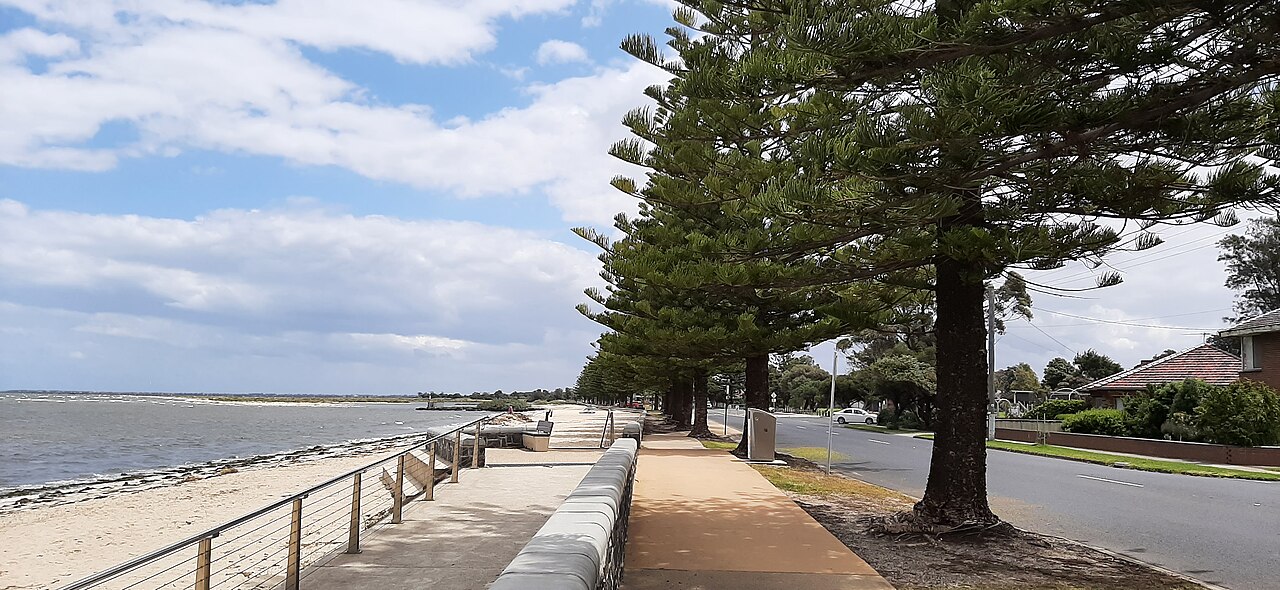
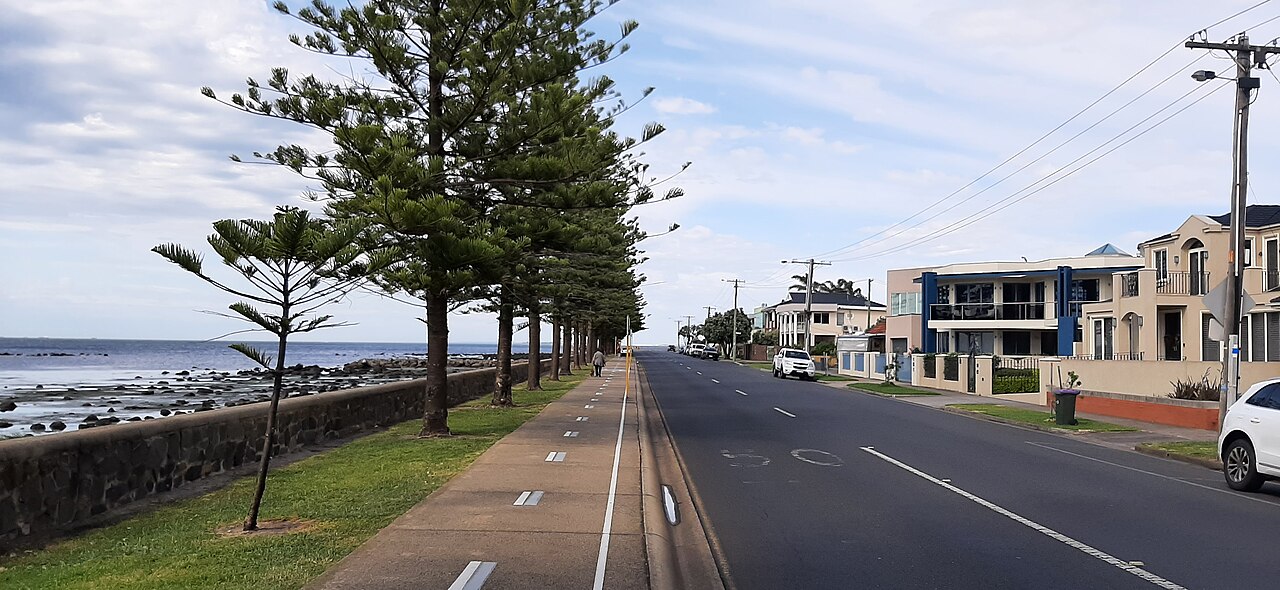
Verdict Box
Best for — renters who want a quieter bay-side base, families who actually use parks and beach paths, and buyers who accept older housing stock for breathing room. Skip if — you need late-night density, constant apartment choice, or a clean CBD commute every day without timetable discipline. Rent pressure — moderate on paper, sharper in practice because good one-bedders and renovated units are thinly supplied. Commute reality — the train is the whole deal. If you are not walking distance to Altona station, your lifestyle becomes more car-dependent than the map suggests. Food scene — useful, not showy. You get dependable local meals, but serious variety still means Newport, Yarraville, Footscray or the city. Family fit — strong for calm streets, sports grounds and bay access, weaker if you need every service within a five-minute walk. Overall score — 7.4/10. Altona is not cheap beach life; it is paid-for quiet with a transport catch.
At-a-Glance Table
| Factor | Altona 2026 |
|---|---|
| LGA | Hobsons Bay City Council |
| Postcode | 3018 |
| Geographic tier | West |
| Region | middle-west |
| Transport grade | C+ |
| Overall grade | B |
Who It Suits
Nadia, 34, hybrid policy worker — wants bay air, a train option and enough quiet to read planning notices without sirens. The Pram-And-Dog Household — gets daily value from Logan Reserve, the foreshore and flat walking routes. Sam, 41, shift-trade parent — can handle car dependence but needs schools, sport and practical shopping close by.
Rent & Property Reality
$380 per week is the current median asking rent for a 1-bedroom unit in Altona, with REA’s suburb snapshot showing the broader unit market down 4% year on year; see the live realestate.com.au Altona rental market profile. That number is useful, but it is not the whole renting story. A $380 one-bed figure tells you Altona still has a lower entry point than many inner-west suburbs, yet it also hides the scarcity problem: there are not endless neat one-bedroom apartments sitting beside the station. The suburb has houses, older villa units, townhouses and a smaller apartment pool, so the median can look calmer than the inspection queue feels.
For a moving checklist, treat $380 as the floor for a basic one-bed, not as a promise that every inspection will land there. Budget extra if you need secure parking, a newer kitchen, heating that does not feel improvised, or walking distance to Altona station and the beach. Once you add those filters, the practical search range often moves closer to the mid-$400s or beyond, and two-bedroom units can compete hard because singles, couples and small families all chase them. REIV’s March 2025 rent tables also put Altona’s two-bedroom house median at $485 per week with a 3.7% annual lift, which supports the same point: the suburb is not running away like some prestige bayside markets, but anything well-located is still contested.
The plain-language verdict is this: Altona rewards renters who inspect early, apply cleanly and stay flexible on property type. Do not build your budget around the cheapest advertised listing unless you have seen its condition, parking setup and train distance. If you work from home, check mobile reception, window insulation and summer heat before applying. If you commute, a cheaper place beyond easy station range may cost you back the savings in petrol, parking stress and time.
Local Reality & Pockets
The simplest rule is to decide whether you are buying Altona for the train, the bay or the quieter family streets, because the right pocket changes with that answer. If you want the train-led version, favour the walkable band around Altona station, Railway Street North, Pier Street, Sargood Street, Blyth Street and nearby residential streets where errands do not require a car every time. This is the most convenient pocket, but parking can be tight near shops, beach days and station peaks. Inspect at school-pickup time and again on a warm evening, because weekend Altona can feel very different from a Tuesday morning.
If you want a calmer family setup, look around wider blocks north of the railway line and toward Civic Parade, Grieve Parade and the streets feeding into parks and local schools. You get more usable housing and less foot traffic, but the trade-off is that errands spread out. Millers Road access is handy for drivers, though road noise and turning movements can wear thin if your bedroom faces the wrong way. The Esplanade and immediate beach-side addresses are lifestyle-rich but need closer checking for wind exposure, older maintenance, visitor parking and summer congestion.
Two gotchas matter. First, Altona is not uniformly postcard-quiet: railway noise, local traffic and event-day parking can affect streets that look peaceful online. Second, the housing stock is mixed. Some older units are solid and sensible; others have tired insulation, awkward laundries, limited storage and body corporate rules that matter once you live there. The supplied food-map clues around Rugenbarg, Holländische Reihe, Spritzenplatz, Friedensallee, Sternstraße and Neuer Pferdemarkt also underline a practical point for any move: inspect your actual micro-pocket, not the suburb name. A good cafe or restaurant nearby does not fix a poor commute, bad parking or a noisy frontage.
Signature Craving
Altona’s eating life is better judged by repeat-weeknight usefulness than by a single destination dinner. The move-in test is simple: after carrying boxes, can you feed everyone without crossing half the city? On that score, Trattoria Toscana on Holländische Reihe is the kind of real local anchor that matters more than a hyped opening: pasta, familiar service rhythms and a room that suits a tired household. If you want a different register, Olympiade on Rugenbarg gives you Greek comfort, while La Casita Azul and Juan sin Miedo cover Mexican cravings without pretending the suburb is a late-night dining strip. The honest verdict: Altona has enough for regular life, not enough to keep restless diners contained every weekend. That is fine if your checklist prioritises beach walks, school runs and a quieter home base over constant new menus.
Comparisons Table
| Suburb | Transport | Tier | Region |
|---|---|---|---|
| Altona | C+ | West | middle-west |
| Altona Meadows | B+ | West | middle-west |
| Altona North | D+ | West | middle-west |
| Newport | A | West | middle-west |
Trust Block
Author: Priya Sharma — Family-and-community correspondent; reads council planning notices for fun.
Data: data/melbourne_suburbs_master.json (Codex per-LGA enumeration, cross-checked vs VEC + Australia Post + ABS SA2 boundaries), data/suburb_scores.json (composite percentile grades), data/venues/.json (OpenStreetMap + Gemini-verified venue catalog).
Last reviewed: 2026-05-26. Not financial advice. We do not accept paid placements in editorial.
FAQ
Q: Is Altona a good suburb to move to in 2026? A: Yes, if you are clear about what Altona is actually offering. It suits households that want a quieter bay-side base, usable parks, local schools, beach access and a train line without paying inner-south prices. It is less convincing for people who want dense nightlife, constant restaurant choice or a frictionless CBD commute from every street. The best move is to rank your non-negotiables before inspecting: station walk, parking, school access, insulation, and whether you can live with a calmer weekly rhythm.
Q: What should renters check before applying in Altona? A: Check the walk to Altona station, not just the suburb name on the listing. A cheaper unit can become annoying fast if every commute starts with a car shuffle or a long walk in bad weather. Inspect storage, heating, cooling, laundry layout and parking, because older villa units vary widely. Ask about body corporate rules if there is shared land. Also visit at a different time from the inspection, ideally early evening or a warm weekend, to test traffic, noise and parking pressure.
Q: Which Altona pockets are best for families? A: Families should start with calm residential streets near parks, schools and safe walking routes, then test the exact school commute and after-school traffic. The streets around Logan Reserve, Civic Parade and quieter pockets away from the busiest beach traffic can work well if the house layout is practical. Do not assume every larger block is automatically better. Older homes can need heating, cooling and maintenance work, and some streets trade space for more driving. A family-friendly Altona address is the one where daily routines are boring in a good way.
Q: Is Altona affordable compared with nearby suburbs? A: Altona can look relatively affordable beside parts of Williamstown, Newport and inner-west hotspots, but the gap narrows when you filter for renovated, well-located homes. Entry-level rents still exist, especially in older units, yet the best-positioned stock near the station and beach attracts competition. Buyers face the same split: older homes and units create access points, while larger blocks and bay-side addresses are priced for scarcity. Treat Altona as a value suburb only if you are flexible on age, finish or exact street.
Q: How is the commute from Altona to the CBD? A: The train is the key advantage, but it only works cleanly if you live close enough to use it without a second transport step. From Altona station, the CBD commute is manageable for regular office days, especially compared with car travel through the west in peak periods. The catch is frequency, timing and last-mile distance. If your place is a long walk from the station, you may end up driving, parking or relying on buses more than expected. Test the commute at your real work time before signing.
Q: What are the biggest Altona gotchas for new arrivals? A: The first gotcha is that Altona’s calm image can hide very specific noise and parking issues. Streets near shops, the station, the beach and main roads can change character on warm weekends or during peak travel. The second is housing condition. Many homes and units are perfectly serviceable, but older stock may have weak insulation, dated bathrooms, limited storage or awkward parking. The third is lifestyle expectation: Altona is practical and pleasant, but it is not an inner-city suburb with endless venues at your door.
Q: Do you need a car in Altona? A: You can reduce car dependence if you live close to Altona station, shops, schools and the foreshore, but many households will still want at least one car. Grocery trips, sport, childcare, medical appointments and cross-suburb errands are easier with wheels, especially if you live away from the station pocket. Before moving, map your weekly routine rather than your occasional beach walk. A car-free Altona life is possible for disciplined renters near the centre, but it becomes harder for families or shift workers.
Q: Is Altona good for food and local nights out? A: Altona has enough local eating for normal weekly life, but it is not a suburb to choose for endless dining choice. The useful pattern is casual dinners, dependable neighbourhood restaurants and a few go-to places rather than constant new openings. Venues such as Trattoria Toscana, Olympiade, La Casita Azul and Juan sin Miedo give the area some range, but many residents still travel to Newport, Yarraville, Footscray or the CBD when they want a bigger night. That is a trade-off, not a fatal flaw.
Q: What should be on an Altona moving checklist? A: Put the practical checks before the lifestyle ones. Confirm the exact station walk, parking situation, heating and cooling, internet options, bin storage, flood or drainage concerns, and whether the street changes on weekends. For renters, prepare applications before inspection day because good stock can move quickly. For families, check school routes and after-school traffic, not just school names. For buyers, organise building and pest inspections carefully on older homes. Then do one evening visit and one weekend visit before deciding.