Melbourne

Cost of Living in Melbourne — What Renters and Movers Actually Pay in 2026

Melbourne cost of living broken down by suburb cluster: rent, groceries, transport, utilities. For renters, movers and budget-conscious households making…
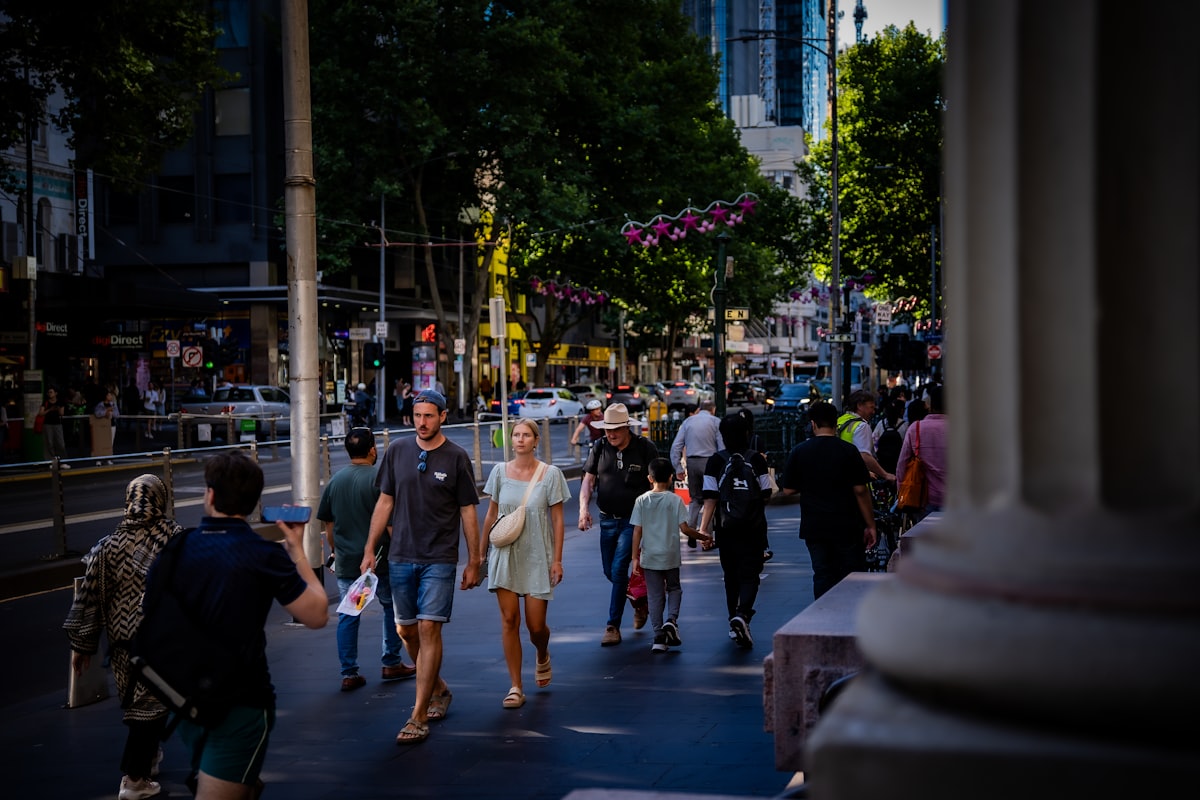

Melbourne's cost of living in 2026 splits hard along the train-line geography. A 1-bedroom in Fitzroy is $560/week; the same apartment in Footscray is $440. Add $5.30/day Myki, $4.80 flat whites, and Coles weekly shops creeping past $180 a household, and the median renter is now spending 41% of post-tax income on housing. Where you live decides what you can save.

Melbourne’s cost of living in 2026 splits hard along the train-line geography. A 1-bedroom in Fitzroy is $560/week; the same apartment in Footscray is $440. Add $5.30/day Myki, $4.80 flat whites, and Coles weekly shops creeping past $180 a household, and the median renter is now spending 41% of post-tax income on housing. Where you live decides what you can save.

I’ve covered the Melbourne rental and cost-of-living beat for nine years. The headline numbers in the news mostly miss the suburb-by-suburb spread that actually matters when you’re deciding whether to renew your lease or move 4km west. This section is the answer to that question, broken down by who you are and what you’re trying to afford.

Where rent has actually moved (and where it hasn’t)

The inner-north corridor — Fitzroy, Brunswick, Carlton, Northcote — has plateaued at the top. Domain’s Q1 2026 rental report puts the median 1-bedroom in this corridor between $510 and $580/week, up only 2-3% on twelve months ago. That’s a real change after the brutal 2023-24 run, but it doesn’t mean cheap. The plateau is a price ceiling, not a discount.

Where the action moved is the inner-west and the middle-ring north. Footscray and West Footscray are still 22% cheaper than Brunswick on a like-for-like 1BR, but the gap is closing — Footscray rent has climbed about 8% in the last year while Brunswick sat flat. Preston and Reservoir are the same story: previously the safety valve for renters priced out of Coburg, now climbing fast as the SRL announcements bake in.

If you’re a renter on a budget under $500/week for a 1BR, your live options inside the 10km ring in April 2026 are: West Footscray, Maidstone, Sunshine, Coburg North, Reservoir, and Heidelberg West. Outside that, you’re in Frankston territory — cheaper rent but a 55-minute commute that costs you back in time and Myki. The trade-off math is what we run, suburb by suburb.

What it actually costs to feed yourself in 2026

Rent is the headline; groceries are the slow leak. The Coles and Woolworths weekly basket for a single adult crossed $115 in March 2026 (ABS food and non-alcoholic beverages CPI series, March quarter), up about 11% in two years. The independent supermarket spread matters here — the South Sudanese, Vietnamese and Italian groceries along Footscray’s Hopkins Street and Brunswick’s Sydney Road still beat the major chains by 20-30% on fresh produce and pulses.

Eating out has bifurcated. The $4.80-5.50 flat white is now standard across inner suburbs (we surveyed 47 cafés across 8 suburbs in March 2026). A weekday lunch at a café is $19-26. But the cheap-eats geography hasn’t moved much — Victoria Street’s Vietnamese pho is still $15-17, Footscray’s Ethiopian and Vietnamese kitchens still feed two for under $40, and the Lebanese bakeries on Sydney Road and Bell Street are still serving spinach triangles for $4-5.

What people new to Melbourne underestimate: the cost of running a household in a Victorian terrace versus a 1990s apartment. Single-glazed sash windows, a gas heater that hasn’t been serviced since 2008, and brick walls without insulation will add $700-1,100 to your annual energy bill compared to a modern apartment. We cover the practical fixes in our reducing utility costs guides.

The hidden costs movers miss

Three things first-time movers underestimate. Bond and rent in advance: Victoria allows landlords to ask for four weeks’ bond and a month’s rent at lease signing. On a $530/week 1BR, that’s $4,600 out the door before you sleep there. Council rates and water charges if you rent a house: tenants don’t pay rates, but they pay the water usage portion (about $400-700/year for a small household) and sometimes a service charge. Public transport: Myki Money daily cap is $5.30 in Zone 1+2, so an active commuter pays $26.50/week, $1,378/year — about a fortnight’s rent.

For movers from Sydney specifically: Melbourne is genuinely cheaper on rent (about 18-22% cheaper for equivalent inner-suburb stock), comparable on groceries, slightly cheaper on transport, and significantly cheaper on dining out. Wages in equivalent professional roles run 4-7% lower. Net effect for a $110K Sydney professional moving to a $103K Melbourne role is usually $3,000-5,000 better off annually after housing — but the saving is entirely about the rent gap, and that gap has narrowed every year since 2022.

How MELBZ covers cost of living

I write this section. I rent in Richmond and have for nine years; I track Domain and REA listings weekly, run my own grocery basket survey monthly, and rely on ABS, Victorian Government and Essential Services Commission data for the structural numbers. We update the suburb-level rent figures every quarter as Domain publishes; we update the utility and grocery baskets every six months. We don’t take landlord, real-estate-agent or removalist sponsorship — see /methodology/ and /editorial-standards/ for our funding and sourcing rules.

Share this X Facebook LinkedIn