
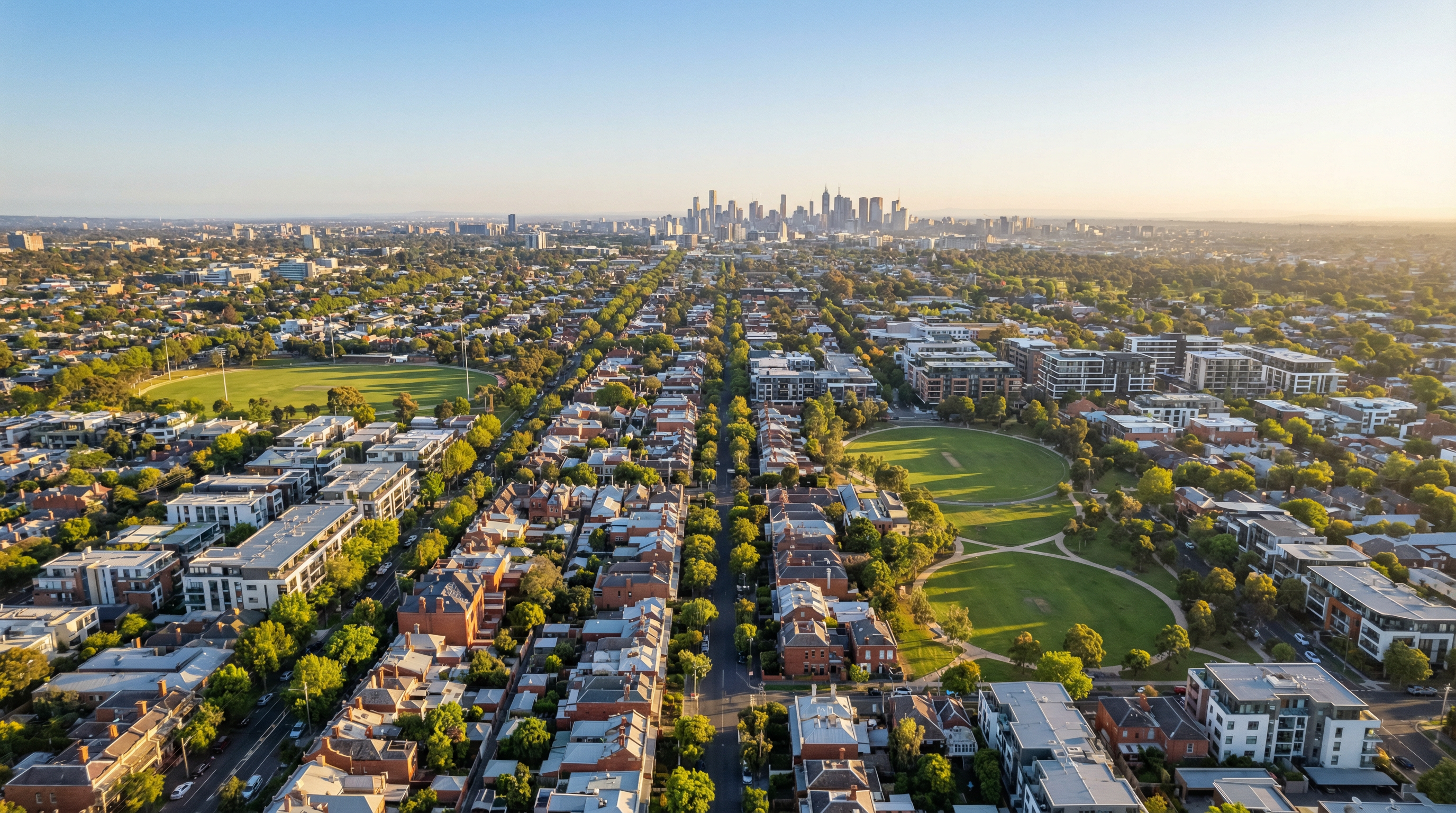
Fitzroy’s crime statistics tell a more nuanced story than the headlines suggest. The suburb sits within the City of Yarra local government area, and its crime profile reflects its dual nature — a densely populated inner-city suburb with a thriving nightlife strip, public housing estates, and quiet residential pockets that feel nothing like Brunswick Street on a Friday night.
Crime Rate Overview
According to the Crime Statistics Agency Victoria, the City of Yarra recorded approximately 8,200 criminal incidents in the year ending September 2025. Fitzroy, as one of Yarra’s most densely populated suburbs, accounts for a significant share of these figures. The suburb’s crime rate per 100,000 population sits above the metropolitan Melbourne average, but context matters — suburbs with active commercial strips, licensed venues, and high foot traffic consistently record higher incident numbers than purely residential areas.
| Offence Category | Fitzroy Rate (per 100,000) | Metro Melbourne Average | Comparison |
|---|---|---|---|
| Crimes Against the Person | Above average | Baseline | Higher due to nightlife precinct |
| Property and Deception | Above average | Baseline | Theft from motor vehicles is the main driver |
| Drug Offences | Above average | Baseline | Reflects policing focus on Smith Street corridor |
| Public Order and Security | Above average | Baseline | Linked to licensed venue density |
What Drives the Numbers
The single biggest factor inflating Fitzroy’s crime statistics is its commercial and nightlife activity. Brunswick Street and Smith Street between them host dozens of bars, pubs, and late-night venues. The Crime Statistics Agency’s data consistently shows that offences in entertainment precincts are committed overwhelmingly by visitors to the area, not residents.
Property crime — particularly theft from motor vehicles and bicycle theft — accounts for the largest share of recorded offences. This is consistent across all inner-Melbourne suburbs with high street parking turnover and limited secure bicycle storage.
Drug offences in the data reflect policing strategy as much as actual drug activity. The Smith Street corridor has historically been a focus for Victoria Police operations, which means more detections get recorded compared to suburbs where enforcement is less concentrated.
Residential Safety
The picture changes significantly when you look at residential streets away from the commercial strips. Streets like Napier Street, Gore Street, and the quieter sections of Moor Street have crime profiles closer to suburban averages. Residents in these areas report feeling safe walking at night, and the data supports that — violent crime against residents in their homes is rare.
The public housing estates — particularly Atherton Gardens on Brunswick Street — have their own safety dynamics. Victoria Police maintains a dedicated presence, and community safety programs operate through the Fitzroy Learning Network and neighbourhood houses. Crime within the estates is lower than media coverage might suggest, though antisocial behaviour complaints are higher than surrounding streets.
Trends Over Time
Fitzroy’s crime rate has been trending downward over the past five years, consistent with broader metropolitan Melbourne trends. The most significant drops have been in:
- Burglary and break-ins: Down as more properties install security systems and apartment buildings replace older housing stock
- Assault: Down, partly attributed to improved venue management and the introduction of CCTV along Brunswick Street
- Motor vehicle theft: Down, though theft from vehicles remains stubbornly high
The one category showing an increase is fraud and online offences, which is a state-wide trend unrelated to Fitzroy’s specific characteristics.
How Fitzroy Compares to Neighbouring Suburbs
Fitzroy’s crime rate is higher than Clifton Hill and Northcote, which have fewer licensed venues and less commercial activity. It is comparable to Collingwood, which shares similar nightlife characteristics along Smith Street. It is lower than Melbourne CBD, which has the highest crime rate in the metropolitan area by a significant margin.
| Suburb | Overall Crime Rate | Main Driver |
|---|---|---|
| Melbourne CBD | Very High | Commercial density, nightlife, homelessness services |
| Fitzroy | Above Average | Nightlife precinct, commercial strips |
| Collingwood | Above Average | Smith Street venues, industrial areas |
| Clifton Hill | Average | Primarily residential |
| Northcote | Average | Mixed residential and commercial |
Practical Safety Advice
For residents and visitors, the practical safety picture in Fitzroy comes down to a few straightforward points. Avoid leaving valuables visible in parked cars, particularly along Brunswick and Smith Streets. Use well-lit routes when walking late at night — Fitzroy’s grid layout means there are usually multiple route options. The 112 tram along Brunswick Street runs late and provides a safe transport option.
For property, secure bicycle storage is essential — Fitzroy has one of the highest bicycle theft rates in Melbourne. Ground-floor apartments and older terrace houses without security screens are the most common targets for opportunistic break-ins.
Data Sources
All crime statistics referenced in this article are sourced from the Crime Statistics Agency Victoria, which publishes quarterly data by local government area and postcode. MELBZ updates this article quarterly to reflect the latest available data.
Last updated: April 2026. Next update: July 2026.
💬 Discussion
Join the conversation — no account needed