Verdict Box
Best for: renters who want inner-city access without paying Richmond or Brunswick prices, and who can handle a bit of noise, grit, and apartment oversupply. Skip if: you need quiet streets, effortless parking, polished shopfronts, or school-run calm every morning. Rent pressure: still cheaper than many inner suburbs, but the cheap story is getting lazy. Realestate.com.au has 1-bedroom units at a $450/week median and 2-bedroom units at $570/week, so couples get more value than singles. Commute reality: trains are the win. Driving is where patience goes to die, especially around Ballarat Road, Geelong Road, Hopkins Street, and the station edges. Food scene: very strong if you actually eat locally rather than just say you do. Barkly Street and Leeds Street carry the suburb. Family fit: workable near parks and quieter pockets, less fun beside major roads or nightlife spillover. Overall score: 7.4/10. Footscray is still value, but it makes you earn the discount.
At-a-Glance Table
| Factor | Footscray 2026 |
|---|---|
| LGA | Maribyrnong City Council |
| Postcode | 3011 |
| Geographic tier | Inner |
| Region | inner-west |
| Transport grade | A+ |
| Overall grade | C+ |
Who It Suits
Mina, 29, hospital shift worker — wants train access, late food, and rent that does not eat the whole roster. The Car-Lite Couple — can split a 2-bedder, use Footscray Station, and avoid paying for a lifestyle they do not use. Ravi and Jess, new parents — will like the parks and food, but need to inspect noise, pram storage, and parking before signing.
Rent & Property Reality
$450 per week is the current median for a 1-bedroom unit in Footscray, with the wider unit market up 4% year on year according to realestate.com.au market insights. That number is useful, but do not treat it like a promise. It is the middle of the leased unit market, not the price of the apartment you will want after work on a Tuesday.
The practical read is this: Footscray still gives singles a lower entry point than many inner suburbs, but the gap is not generous once you add the normal costs. A $450/week one-bedder is $23,400 a year before power, internet, contents insurance, public transport, groceries, and the occasional meal you bought because Barkly Street was easier than cooking. If you earn around $75,000 before tax, that rent is manageable but not casual. If you earn closer to $60,000, it starts to dictate your week.
Couples usually get the better deal here. Realestate.com.au lists the median 2-bedroom unit at $570/week, which means two earners splitting a decent apartment can land closer to $285 each before bills. That is why Footscray often feels more forgiving for couples than for solo renters. The jump from one bedroom to two is not as brutal as it is in some inner-north suburbs, because Footscray has plenty of newer apartment stock around Joseph Road, Hallenstein Street, Moreland Street, Hopkins Street, and Ballarat Road.
Families face a different equation. Houses are not cheap in a meaningful sense: the same source puts median house rent at $623/week, with 3-bedroom houses at $650/week. That still beats many suburbs closer east, but you are competing for fewer family-suitable homes, and the cheaper ones often ask you to accept road noise, older insulation, awkward parking, or a tired kitchen. The budget verdict is not “Footscray is cheap”. It is “Footscray gives you options, but every option has a trade-off you should inspect in person.”
Local Reality & Pockets
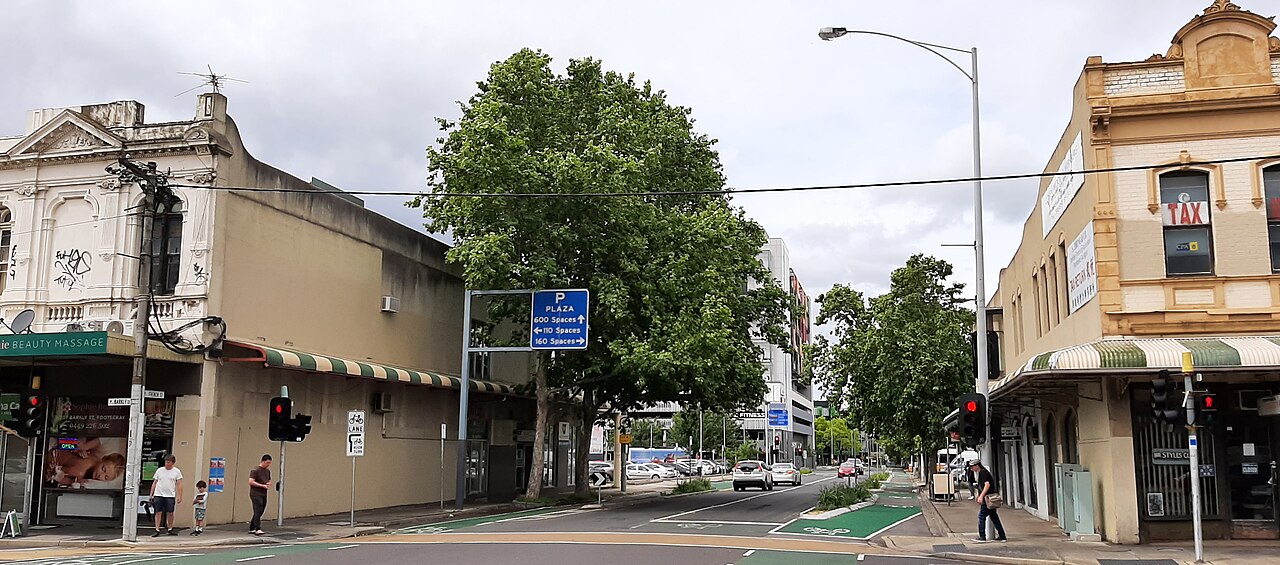
Favour the parts of Footscray that match your daily habits, not the parts that look good in a listing photo. If you use trains, being near Footscray Station, Irving Street, Leeds Street, Nicholson Street, or the Barkly Street spine is genuinely useful. You can get food, groceries, coffee, errands, and trains without building your whole life around a car. The trade-off is noise: station edges, busier retail strips, late-night foot traffic, delivery trucks, and bin collections all come with the convenience.
For a slightly calmer rental, look around the streets that sit back from the heaviest roads while still keeping the station walk realistic. Pockets around Essex Street, parts of Barkly Street away from the hardest traffic, and the quieter residential sections between the commercial strips can work well. If you are looking at newer apartments around Joseph Road, Hallenstein Street, Moreland Street, Warde Street, or Hopkins Street, inspect the exact building rather than judging the whole pocket. Some are practical, secure, and easy. Others feel like investor stock with small bedrooms, limited storage, and body corporate rules that make moving day painful.
Be wary of Ballarat Road, Geelong Road, Hopkins Street, and major intersections if you are noise-sensitive. They are convenient on a map and annoying at 6:40 am. Trucks, sirens, tram and train connections, and through-traffic change the feel of a place fast. Parking is the other trap. Older streets were not designed for every share house, apartment, and visitor to have a car. A listing that says “street parking available” can mean circling at dinner time and giving up near your own front door.
Two gotchas matter. First, some cheap apartments photograph well but have poor natural light, thin glazing, or bedrooms that barely fit a real bed. Go during peak traffic and stand quietly for two minutes. Second, Footscray can feel very different street to street. One block is practical and friendly; the next is loud, messy, and tiring. That does not make it bad. It means the inspection matters more than the suburb name.
Signature Craving
The budget move in Footscray is not pretending you will cook every meal. It is choosing the few places that actually earn repeat spending. Rudimentary on Leeds Street is the obvious breakfast checkpoint: good for the morning you need something proper before a long commute, but not where you go if you are trying to keep every weekend under $30. Ollie’s Deli on Barkly Street is the more dangerous habit because sandwiches feel modest until they become a weekly line item. West 48 on Essex Street works for coffee and a sit-down reset, especially if you live on the quieter western side. The honest verdict: Footscray rewards people who budget for local food instead of pretending they will resist it. If rent is tight, set a weekly cafe cap before Barkly Street makes the decision for you.
Comparisons Table
| Suburb | Transport | Tier | Region |
|---|---|---|---|
| Footscray | A+ | Inner | inner-west |
| Braybrook | D+ | Inner | inner-west |
| Kingsville | N/A | Inner | inner-west |
| Maidstone | N/A | Inner | inner-west |
Trust Block
Author: Marcus Cole — Long-time Melbourne local who eats his way through the inner-east. Property cynic.
Data: data/melbourne_suburbs_master.json (Codex per-LGA enumeration, cross-checked vs VEC + Australia Post + ABS SA2 boundaries), data/suburb_scores.json (composite percentile grades), data/venues/.json (OpenStreetMap + Gemini-verified venue catalog).
Last reviewed: 2026-05-26. Not financial advice. We do not accept paid placements in editorial.
FAQ
Q: Is Footscray still cheap in 2026? A: It is cheaper than many inner suburbs, but calling it cheap is sloppy. A 1-bedroom unit median around $450 per week is still a real bill for a single renter, and family houses can sit around the mid-$600s depending on bedrooms and condition. The suburb’s value is mostly about access: strong train connections, food, markets, parks, and proximity to the CBD. You are not getting a bargain with no compromise. You are getting a lower price because noise, older stock, parking stress, and uneven streets are part of the deal.
Q: What should a single renter budget for in Footscray? A: A single renter should start with rent, then add reality. At $450 per week, rent alone is $23,400 a year. Add electricity, gas if the property has it, water usage where applicable, internet, phone, contents insurance, Myki costs, groceries, and a small eating-out allowance. A practical solo budget often lands well above $3,000 a month once you include normal life rather than just survival. The pressure point is not the headline rent; it is the way small conveniences stack up when you live near good food and transport.
Q: Is Footscray better value for couples than singles? A: Usually, yes. The 2-bedroom unit median around $570 per week gives couples a much better split than a single person taking a 1-bedroom alone. Two people paying roughly half each can keep housing costs more manageable while gaining a spare room, study, or storage space. The warning is that not all 2-bedroom apartments are equal. Some newer builds have tiny second bedrooms, awkward layouts, or limited parking. Couples should inspect room dimensions, noise from adjoining apartments, and whether both people can actually work from home without hating the floor plan.
Q: Can a family live comfortably in Footscray on a budget? A: A family can make Footscray work, but it is not automatically easy. Houses cost more, family-sized rentals are less plentiful than apartments, and parking near busy strips can become a daily irritation. The upside is strong access to parks, food shopping, public transport, and services. The better family fit is usually a quieter residential pocket away from Ballarat Road, Geelong Road, and the station crush. Families should check school zones, outdoor space, heating and cooling, storage, and pram access before falling for location alone.
Q: Do you need a car in Footscray? A: Many renters can live without a car if they are close to Footscray Station, Barkly Street, Leeds Street, Nicholson Street, or regular bus and tram connections. That is one of the suburb’s biggest budget advantages because car ownership can quietly add thousands a year. But car-free living depends on your job, family needs, and weekend patterns. If you work odd hours, travel across the western suburbs, or have children’s activities spread out, a car may still be useful. The problem is parking, not mobility. Inspect parking conditions at night, not just during an open home.
Q: Which Footscray streets are noisy? A: Expect more noise around Ballarat Road, Geelong Road, Hopkins Street, Nicholson Street, major intersections, and the station-side apartment zones. That does not mean every property there is bad, but glazing, orientation, floor level, and bedroom position matter. A rear-facing apartment can be fine while a front-facing one feels relentless. Weekend nights and early weekday mornings are different tests, so inspect at the time you are most sensitive. If you work from home or sleep lightly, prioritise side streets, double glazing, and bedrooms away from loading zones, traffic lights, and tram or bus stops.
Q: Are the newer apartments around Joseph Road and Hopkins Street worth it? A: Some are worth it, especially if you want lift access, security, a quick station walk, and lower maintenance than an older flat. The risk is that newer stock can be investor-grade: small bedrooms, limited storage, average ventilation, and layouts designed to lease quickly rather than live generously. Check the actual floor plan, not just the building name. Ask about embedded networks, move-in fees, parcel handling, visitor parking, bike storage, and whether construction noise or nearby development is ongoing. A convenient apartment can still be a bad deal if the weekly rent buys frustration.
Q: How much should couples budget beyond rent? A: For a couple in a 2-bedroom unit around $570 per week, rent is about $29,640 a year before bills. Add electricity, gas if used, internet, water usage, insurance, phones, transport, groceries, and eating out. The real swing factor is lifestyle leakage: coffees, lunches, delivery, quick dinners, and drinks after work. Footscray makes that easy because good food is close and often cheaper than the inner east, but cheap meals are still spending. A disciplined couple can do well here. A careless couple can lose the rent advantage one small transaction at a time.
Q: What is the honest local verdict for 2026? A: Footscray is still one of the stronger value plays near the CBD, but it is not a soft landing. It suits renters who can use public transport, tolerate street-by-street variation, and make smart compromises on apartment size, parking, or noise. It is less suitable for people who want quiet, polished streets and simple car storage. The suburb’s strength is practical: trains, food, services, and rental choice. The weakness is also practical: road noise, patchy building quality, competition for good family homes, and the need to inspect carefully before believing the listing.