You want the real Kew East weekly number before you sign a lease: $629 for a single, $963 for a couple, and $1533 for a family with two kids. The killer is not coffee. It is rent plus car dependence.
The Verdict
The number to budget around in Kew East is $963 a week for a couple, because that is the most realistic middle case for a normal two-person household renting locally, buying standard groceries, paying utilities, and using a mix of car and public transport. Singles can make Kew East work from about $629 a week, but only if they are disciplined on groceries and do not pretend brunch, takeaway, and car costs are tiny extras. Families should treat $1533 a week as the baseline, not the stretch number, because three-bedroom housing and bigger winter bills move fast.
Housing is the line item that decides everything. Current Kew East rental listings put a one-bedroom apartment at $222-302 a week, a two-bedroom apartment or unit at $378-478, and a three-bedroom house at $633-783. That is cheaper than many inner-CBD setups by roughly $100-200 a week on rent, but the saving is partly eaten by transport. A car is close to mandatory here. Myki alone is about $36 a week for daily commuting, but realistic car running costs sit closer to $120-180 a week once fuel, rego, insurance, and servicing are counted. Do not build your budget around rent only. You will regret it when winter gas, servicing, and dining out land in the same month.
Local Reality
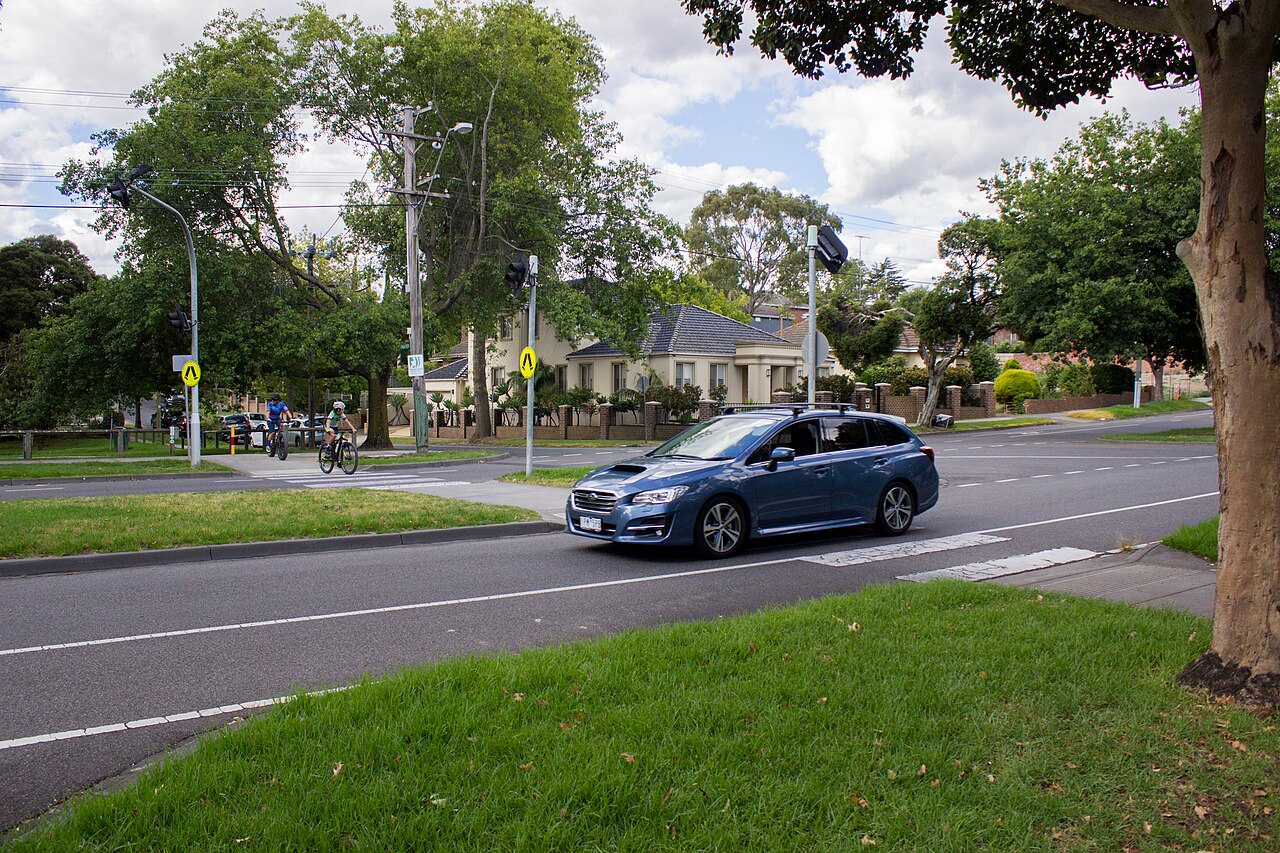
Kew East is not a suburb where you casually replace a car with perfect public transport and feel clever. Public transport exists, but the original budget is blunt for a reason: it adds commute time. Parking is rarely the problem because most homes have driveways or garages. The real problem is that the cheaper weekly rent can make people undercount the boring running costs that come with a more car-shaped week.
Groceries are where the budget can either behave or quietly fall apart. Coles and Woolworths cover the standard shop, and some residents drive to Aldi because a normal grocery run can be $30-50 cheaper there. A single trying to stay lean should think $89-119 a week for budget groceries, $129-159 for a standard shop, and $169-229 if specialty stores, organic items, and regular dining creep in. Couples should assume more like $206 a week in the headline budget, while families land around $283.
The local trap is eating out. A cafe brunch at $18-26 a person does not look dangerous once. A mid-range dinner for two at $70-110 without drinks is where the month starts leaking. Skip this if you are the kind of household that refuses to track dining out; Kew East will feel more expensive than the rent spreadsheet promised. If your week is mostly CBD commuting, the rent saving is still real, but you need to price the longer commute and car use honestly before calling it a win.
Who This Suits
If you are a single renter, pick a room in a share house if the numbers matter. The original data puts share-house rooms at $298-348 a week, which can be more sensible than forcing a one-bedroom lifestyle and then trying to claw money back from groceries. If you are a couple, pick the two-bedroom apartment or unit budget and plan around $963 a week all-in. If you are a family with two kids, pick the three-bedroom house scenario and do not ignore childcare, school fees, and winter utilities. If you are an owner, add council rates of $2719 a year, and if you are buying an apartment, body corporate can be a serious annual hit at around $6315.
Cost expectations should be boring and specific. A workable single budget is $629 a week, $2516 a month, or $32,708 a year. A couple should plan for $963 a week, $3852 a month, or $50,076 a year. A family with two kids should plan for $1533 a week, $6132 a month, or $79,716 a year. Utilities are not dramatic most of the year, but they are not invisible: electricity, gas, water, internet, and mobile together add up quickly, especially once more people are in the house.
The season caveat matters. From June to August, gas heating in Kew East can push winter bills up 40-60%, so add another $15-30 a week during those months. Hybrid workers should use Myki money rather than a pass if they are not travelling every day. Newer solar-ready homes can reduce energy bills, but only if you compare plans quarterly instead of letting the default rate sit there untouched.
What to Do Next
Before you apply for a lease, run your numbers against the weekly table below, then check the latest medians in the Kew East rent guide. If the car line feels optional, redo the budget.
The Quick Numbers
| Expense | Single | Couple | Family (2 kids) |
|---|---|---|---|
| Rent | $222/wk | $378/wk | $633/wk |
| Groceries | $129/wk | $206/wk | $283/wk |
| Transport | $36/wk | $64/wk | $72/wk |
| Utilities | $56/wk | $56/wk | $78/wk |
| Internet/Phone | $67/wk | $67/wk | $67/wk |
| Weekly Total | $629/wk | $963/wk | $1533/wk |
| Monthly Total | $2516/mo | $3852/mo | $6132/mo |
| Annual Total | $32,708/yr | $50,076/yr | $79,716/yr |
Utilities & Bills
| Utility | Single | Couple | Family |
|---|---|---|---|
| Electricity | $25-35/wk | $30-45/wk | $40-60/wk |
| Gas (if connected) | $10-18/wk | $12-22/wk | $15-28/wk |
| Water | $8-12/wk | $10-15/wk | $12-20/wk |
| Internet (NBN) | $20-25/wk | $20-25/wk | $20-25/wk |
| Mobile | $10-15/wk | $20-30/wk | $30-50/wk |
Budget data compiled from ABS household expenditure surveys, local rental listings (Domain, realestate.com.au), and utility comparison sites. Updated April 2026. Individual circumstances vary.