Verdict Box
Honest reality: Kilmore is not a lifestyle suburb pretending to be inner north with paddocks. It is a practical, car-first regional town for people who want space, school access, a slower weeknight rhythm and a mortgage or rent figure that still makes sense. The contrarian part: the town is more convenient than outsiders assume, but less frictionless than relocation ads suggest. Sydney Street gives you supermarkets, basics and takeaway, yet it also carries highway traffic through the middle of daily life. Kilmore East station is useful, but it is not a walk-up metro stop for most households. Rent pressure is moderate rather than bargain-bin: small one-bedroom stock is thin, family houses move faster, and the best rentals are often taken by applicants who already understand the drive-to-station routine. Best for: families, tradies, hybrid workers, downsizers and people who genuinely like quiet nights. Skip if: you need late dining, dense public transport, easy apartment choice or spontaneous city access. Overall score: 7/10 if you choose the right pocket; 5/10 if you assume it behaves like outer Melbourne.
At-a-Glance Table
| Factor | Kilmore 2026 |
|---|---|
| LGA | n/a |
| Postcode | n/a |
| Geographic tier | n/a |
| Region | n/a |
| Transport grade | N/A |
| Overall grade | N/A |
Who It Suits
The Hybrid Worker — wants a proper backyard and can limit city trips to two or three days a week. Leah, 41, school-run realist — values parking, supermarkets and predictable routines over late-night choice. The Tradie Couple — needs trailer space, highway access and rent that does not punish having tools, pets or kids.
Rent & Property Reality
Median 1BR rent signal: about $340/wk, up roughly 5.4% year on year, using Domain’s current estimate for a one-bedroom apartment at 6/26 Victoria Parade as the cleanest public 1BR signal in a market with very limited small-stock data (Domain). Treat that as a guide, not a suburb-wide promise. Kilmore does not have the deep one-bedroom apartment pool you would expect in Brunswick, Footscray or even Wallan. The town is dominated by houses, townhouses, older units and larger blocks, so the published 1BR figure can swing depending on whether the sample is a compact flat, a cottage, a unit over commercial space or an unusual acreage listing.
For a better everyday benchmark, compare the 1BR signal with REA’s suburb snapshot: houses in Kilmore are around $485/wk, up 1% over the year, while units sit around $440/wk (realestate.com.au). That tells you the real rental conversation. A single renter chasing a neat one-bed may find the headline number attractive, but the actual search can be frustrating because stock is scarce and inspections are spread out. A couple or small family looking at two or three bedrooms should budget closer to the unit and house medians, then allow extra for heating, commuting fuel, gardening gear and the occasional paid trip when the train timetable does not match your day.
The plain-language verdict: Kilmore is cheaper than many Melbourne-edge suburbs, but it is not cheap enough to ignore transport costs. If you work in the CBD five days a week, add station driving, V/Line timing, parking uncertainty and late-return risk before declaring victory. If you work locally, in the northern growth corridor, in trades, health, education, logistics or hybrid office work, the rent equation improves sharply. The strongest applications will still be the boring ones: steady income, complete documents, realistic move-in date and a clear answer on pets. In a smaller rental market, agents remember half-finished applications faster than they do in bigger suburbs.
Local Reality & Pockets
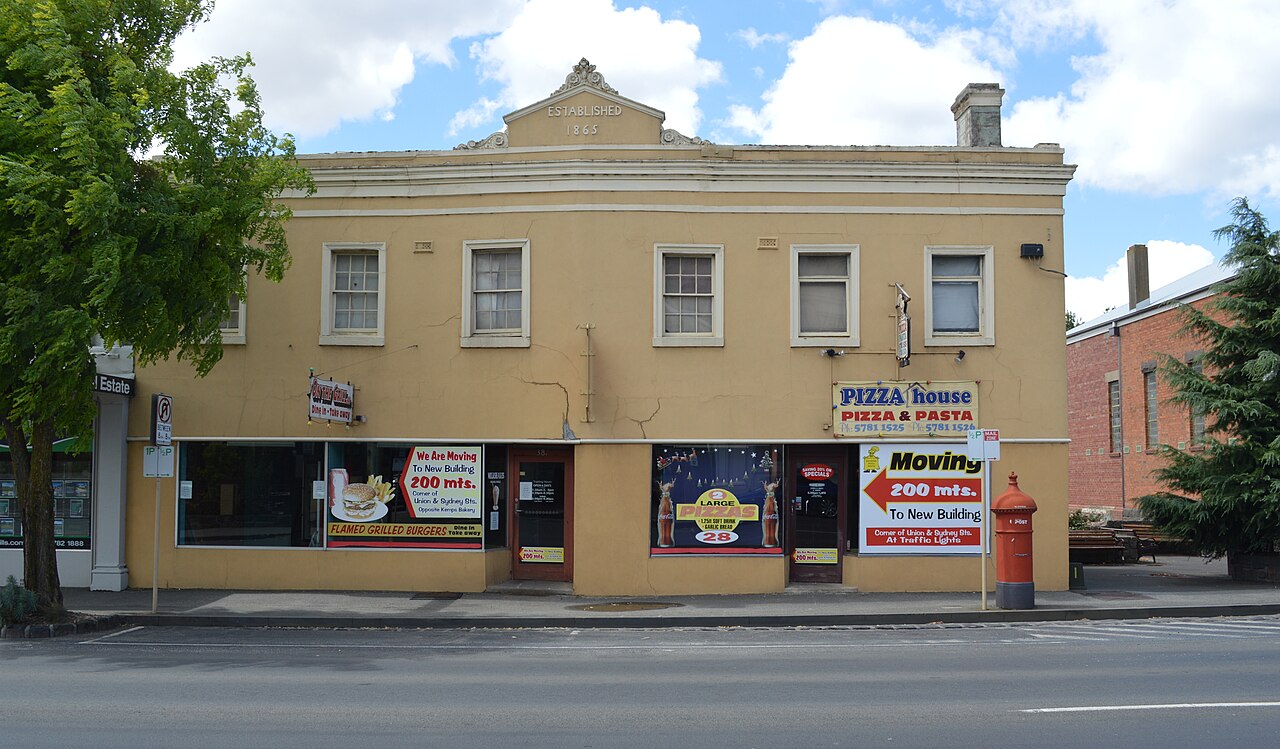
Favour the streets that match your actual week, not the postcard version of country living. If you want walkable errands, look around the older central grid near Sydney Street, Powlett Street, Victoria Parade, Church Street, Bourke Street and Union Street. You will be closer to supermarkets, cafes, parks and schools, but you must inspect for traffic exposure, truck noise and older-building maintenance. Sydney Street is the commercial spine and also part of the through-road experience, so a cute address near the shops can come with brake noise, delivery activity and less privacy than the listing photos suggest.
If quiet is the priority, look slightly away from the main strip toward established residential streets and newer estates off roads such as Green Street, Mill Road, Rida Park Drive and the newer local-road networks on the town edges. These pockets can give better driveways, garages and family layouts, but they are more car-dependent. Check the school run at 8:15am, not just the open-home slot at 11:00am. Also check mobile reception inside the house, because thick older walls and edge-of-town blocks can produce annoying dead spots.
Avoid assuming Kilmore East station solves every commute. V/Line’s Seymour line timetable shows Kilmore East to Southern Cross taking roughly 70 to 75 minutes on many morning services, before you add the drive or bus from town (V/Line Seymour timetable). There is a Kilmore East Station to Kilmore bus, with town stops including Clarke Street/Sydney Street, Union Street/Sydney Street and Hudson Park/Sydney Street, but most households will still want a car for reliability.
Two honest gotchas: first, Sydney Street streetscape works and the wider bypass conversation exist because traffic through the town is a real issue, not a minor complaint. Mitchell Shire notes Sydney Street improvements and the Northern Highway/Wandong Road roundabout work in its local planning material (Mitchell Shire). Second, parking feels easy until school events, weekend sport, medical appointments and supermarket peaks overlap. Inspect driveway depth, turning room and visitor parking as seriously as you inspect the kitchen.
Signature Craving
Honest reality: Kilmore is a residential, practical town first, not a suburb where the food scene does the selling. You can get the basics locally, and Oddfellows Cafe on Sydney Street gives town-centre coffee without turning the move into a dining thesis, but the dependable brunch escape is usually down the road. Cafe #41 on High Street in Wallan is the kind of neighbouring-suburb fallback Kilmore renters should know before moving: early starts, simple breakfast, takeaway and enough reliability for a Saturday errand loop. That matters because the move-in week here is less about discovering a new bar every night and more about knowing where to get coffee after the hardware run, the school-uniform run and the station trial run. If your benchmark is dense inner-city dining, Kilmore will feel thin. If your benchmark is practical fuel between real jobs, it works.
Comparisons Table
| Suburb | Transport | Tier | Region |
|---|---|---|---|
| Kilmore | N/A | n/a | n/a |
| Fitzroy | C | Inner | inner-north |
| St Kilda | B | Inner | inner-south |
| Brunswick | A+ | North | middle-north |
Trust Block
Author: Jack Morrison — Bayside and west property correspondent. Walks every suburb he writes about.
Data: data/melbourne_suburbs_master.json (Codex per-LGA enumeration, cross-checked vs VEC + Australia Post + ABS SA2 boundaries), data/suburb_scores.json (composite percentile grades), data/venues/.json (OpenStreetMap + Gemini-verified venue catalog).
Last reviewed: 2026-05-26. Not financial advice. We do not accept paid placements in editorial.
FAQ
Q: Is Kilmore a good place to move in 2026? A: Kilmore is a good move if your priorities are space, quieter streets, schooling options, a house-oriented rental market and access to the northern regional corridor. It is a weaker fit if you want dense public transport, late-night venues, easy one-bedroom choice or a short daily CBD commute. The suburb works best for households that can drive, plan around V/Line rather than improvise around it, and accept that local convenience is practical rather than polished. Inspect at commute times and school times before you sign.
Q: What should I check before signing a lease in Kilmore? A: Check heating, insulation, driveway access, internet options, mobile reception, water pressure, fence condition and whether the property sits near heavy traffic on Sydney Street or Northern Highway approaches. Kilmore has plenty of older housing and larger blocks, so the nice parts of a listing can hide higher maintenance and utility costs. Ask how the property is heated, whether there is evaporative cooling or split systems, and who maintains lawns. Also test the drive to Kilmore East station from the actual address, not from the town centre.
Q: Can you live in Kilmore without a car? A: You can survive without a car only if your address, job, school and tolerance for waiting all line up unusually well. For most residents, Kilmore is car-first. There is a bus connection between Kilmore and Kilmore East station, and the town centre has daily basics, but the rhythm is not metro-style. Groceries, medical appointments, sport, school events and late returns all become harder without a vehicle. A one-car household may work for a couple; a zero-car household should be treated as a deliberate compromise, not an easy saving.
Q: How hard is the commute from Kilmore to Melbourne? A: The train leg from Kilmore East to Southern Cross is often around 70 to 75 minutes on morning V/Line services, then you need to add the trip from your house to the station, parking or bus time, and the final leg from Southern Cross to your workplace. Driving to Melbourne can also vary heavily depending on Hume Freeway conditions and the time you leave. Two or three office days a week can be manageable. Five long CBD days can turn the cheaper rent into a time-cost problem.
Q: Which Kilmore streets are better for first-time renters? A: First-time renters should start by comparing central convenience against quiet. Around Sydney Street, Powlett Street, Victoria Parade, Church Street, Bourke Street and Union Street, you get easier access to shops, parks and services, but more activity and possible traffic noise. Streets farther out toward Green Street, Mill Road, Rida Park Drive and newer estate pockets can feel calmer and more spacious, but you become more dependent on the car. The best choice depends on whether your week is built around schools, station access, shift work or home-based work.
Q: Is Kilmore affordable compared with Melbourne suburbs? A: Kilmore is generally more affordable than many Melbourne fringe and middle-ring suburbs, especially if you are comparing house rents or land size. The trap is comparing rent only. Add fuel, V/Line travel, car maintenance, heating a larger home, gardening costs and the time value of longer trips. A household working locally or hybrid can come out well ahead. A household commuting to the CBD every weekday may find the total cost less impressive. Affordability here is strongest when the whole routine fits, not just the weekly rent.
Q: What is the biggest mistake people make when moving to Kilmore? A: The biggest mistake is inspecting on a quiet weekend and assuming that is the whole suburb. You need to see Sydney Street during traffic, the station approach during the morning commute, school areas during pickup, and your prospective street after dark. Also check how far the property really is from daily basics. A map can make a five-minute drive look trivial, but repeated errands add up. Kilmore suits planners. It punishes people who move first and only then discover their week depends on awkward timing.
Q: Is Kilmore family-friendly? A: Kilmore can be family-friendly because it offers larger homes, established schools, sports facilities, parks and a calmer night-time pattern than many metro suburbs. The family fit depends heavily on address and routine. Being close to schools and shops helps, but road noise and school-run congestion can matter. Larger blocks are useful, but they also mean mowing, maintenance and heating costs. Families should inspect storage, fencing, heating, bathroom practicality and parking for visitors or teenagers. The town rewards households that value routine more than constant entertainment.
Q: What is the honest food and weekend reality in Kilmore? A: Kilmore has enough local food and coffee for normal weeks, but it is not a dining-led move. You will find cafes, pubs, takeaway, supermarkets and practical errands, then you will drive to Wallan, Broadford, Seymour or further south when you want more choice. That is not a failure of the suburb; it is part of the trade. Weekend life is more likely to mean sport, garden jobs, hardware runs, walking, visiting nearby towns or staying home. If you need a packed venue list, Kilmore will feel limited quickly.