Verdict Box
Lang Lang is not a cheap version of an inner suburb. It is a small Western Port town where the budget works because housing is still more attainable than many south-east growth suburbs, not because everyday life is unusually low-cost. The 2026 reality is simple: rent can be competitive, family houses are the main product, and car costs do most of the damage.
If you are comparing Lang Lang with Clyde North, Cranbourne, Pakenham, or coastal Bass Coast towns, the trade is space and quieter streets for fewer services within walking distance. You will not save much on groceries if you expect a full supermarket shop in town every few days. You will save more if you are disciplined: one weekly run to a larger centre, local top-ups only, careful fuel planning, and realistic expectations about public transport.
For a renter, the headline number from realestate.com.au is the one to watch: Lang Lang houses recorded a median rent of $640 per week for May 2025 to April 2026, with only 29 leased across the previous 12 months and 3 houses available in the past month. That means the rent can look manageable on paper, while the actual search can be tight. A smaller 3-bedroom house was reported at $483 per week, but only 8 leased in the same period, so do not build a budget around always finding that exact price.
The honest verdict: Lang Lang suits households that can run at least one reliable car, do not need a train station at the end of the street, and prefer a house-and-yard budget over cafe choice or frequent late-night convenience.
At-a-Glance Table
| Budget line | 2026 working estimate | Local reality |
|---|---|---|
| 3-bedroom house rent | Around $483/week median reported | Very thin leasing volume, so availability matters more than the median |
| All houses rent | Around $640/week median reported | Family homes dominate the rental pool |
| 2-bedroom unit or small dwelling | Around $440-$455/week where available | Unit supply is limited and not a dependable fallback |
| Groceries | $180-$280/week for singles or couples, $280-$450 for families | Local top-ups cost more than planned bulk shops |
| Transport | $90-$220/week per car before finance | Fuel, tyres, servicing, insurance, and rego carry the budget |
| Utilities and internet | $90-$170/week depending on house size | Larger detached homes can lift heating and cooling costs |
| Dining and takeaway | $25-$120/week depending on habits | Useful local options, but not a dense dining strip |
| Practical weekly household range | $850-$1,450 before childcare or debt | The rent line is only half the story |
Who It Suits
The One-Car Couple – wants a house budget below pricier coastal or growth-corridor options, and can plan shopping rather than relying on constant convenience.
Priya, 34, single parent – needs a yard, watches rent closely, and is prepared to batch errands around school, work, and fuel.
The Tradie Household – already drives for work, values trailer space or off-street parking, and does not need a train commute every morning.
The Regional-Edge Renter – accepts limited choice in return for a slower town rhythm and lower pressure than major south-east rental markets.
Rent & Property Reality
The rental market is the first hard truth. Lang Lang can look affordable beside Tooradin or some new-estate pockets, but it is not a deep rental market. According to realestate.com.au’s Lang Lang suburb profile, the median house rent for May 2025 to April 2026 was $640 per week, with 29 houses leased in the previous 12 months. The same source showed 3-bedroom houses at $483 per week and 4-bedroom houses at $660 per week, but those bedroom-level figures came from small lease counts.
That small sample matters. A family might see a 3-bedroom median and assume Lang Lang is a bargain, then discover only one or two suitable listings at a time, with pets, sheds, fencing, heating, school distance, and move-in dates narrowing the field. If your budget only works at the lowest advertised end, you need a backup suburb and a backup month.
Buying also leans heavily toward houses. realestate.com.au reported a 3-bedroom house median of $680,000 and a 4-bedroom house median of $742,500 for May 2025 to April 2026. Units exist in the data, but Lang Lang is not a high-supply unit suburb. The 2021 ABS Census counted 95.1% of occupied private dwellings as separate houses, with only 3.5% flats or apartments. That is excellent if you want land, poor if your budget depends on a steady stream of compact low-maintenance rentals.
ABS data is also useful for stress-testing the weekly budget. The 2021 Census QuickStats for Lang Lang recorded a median weekly household income of $1,807, median monthly mortgage repayments of $1,736, median weekly rent of $310 at that time, and an average of 2.3 motor vehicles per dwelling. The 2026 rent market is materially different from the 2021 Census rent figure, but the car-dependence signal still holds.
A realistic renter budget should allow more than rent plus groceries. For a 3-bedroom house at roughly $483 per week, a household might still land near $950-$1,150 per week once utilities, internet, fuel, insurance, rego, basic food, medical gaps, school costs, and occasional takeaway are included. At the all-house median near $640, the same household can push toward $1,100-$1,350 before childcare, car finance, personal debt, or major savings.
The mortgage version is not automatically easier. A buyer paying around $680,000 for a 3-bedroom house needs to model repayments, rates, insurance, maintenance, and commuting costs. Older houses may need repairs; larger blocks can mean fencing, drainage, garden equipment, and bigger heating or cooling bills. Lang Lang can still work well for buyers, but only when the household has priced the whole property, not just the deposit.
Local Reality & Pockets
Lang Lang’s everyday spending pattern is shaped by Westernport Road, the South Gippsland Highway, and the fact that the town centre is compact. Cardinia Shire’s township material identifies Westernport Road as the main commercial and retail focus, and the street is where most quick errands happen. The practical question is not “Can I buy milk locally?” It is “How often will I pay small-town convenience prices because I did not plan the bigger shop?”
There is a local IGA/FoodWorks presence on Westernport Road, plus bakery, cafe, takeaway, service, and small retail options. That is enough for top-ups, lunch, forgotten ingredients, and the kind of errands that save a drive. It is not the same as living next to a large discount supermarket, a full medical precinct, a major shopping centre, and several competing fuel stations. Many households will still drive to Koo Wee Rup, Cranbourne, Pakenham, or Wonthaggi depending on work routes and family commitments.
The town also has a genuine rural-edge cost profile. ABS occupation data from 2021 showed technicians and trades workers, machinery operators and drivers, and labourers as major local occupation groups. That matters because a lot of residents are not treating Lang Lang as a walkable lifestyle purchase. They are using it as a base: house, shed, car, work route, school routine, weekend sport, and regional errands.
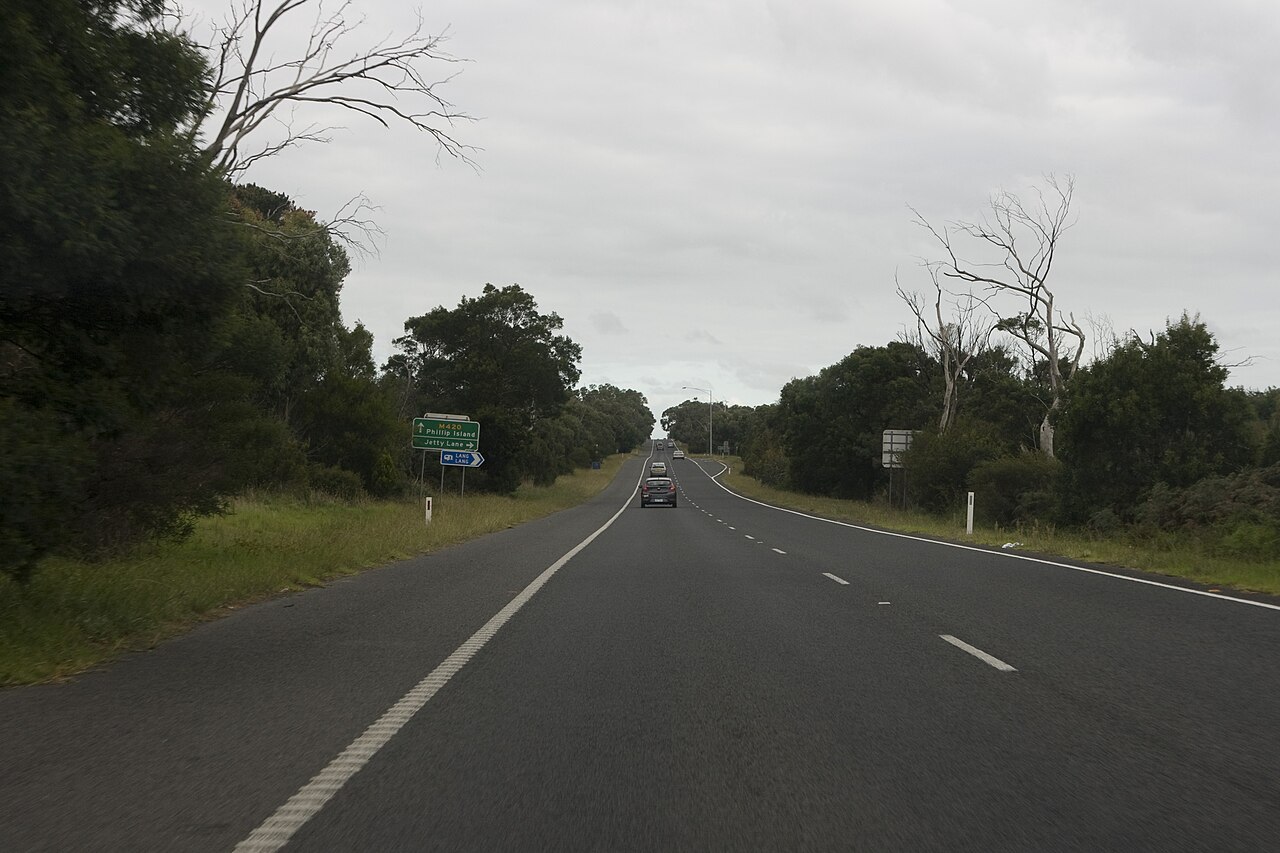
Transport is the make-or-break category. V/Line’s Yarram to Melbourne coach route runs through Lang Lang and connects with Koo Wee Rup, Leongatha, Dandenong, and Southern Cross on the published timetable, but this is not a turn-up-and-go metro train service. If your job requires fixed daily arrival times, late finishes, or multiple cross-town trips, you should price the car as essential. A second car can easily erase the rental saving that attracted you in the first place.
Pockets close to the town centre are more useful for households trying to keep one car idle during the week. Being near Westernport Road means shorter walks for small groceries, coffee, school runs, and local appointments. More rural-feeling properties can offer space, but they ask more of the budget: extra driving, tank or maintenance considerations in some cases, mowing equipment, fencing, and higher time costs.
For renters, inspect heating, cooling, insulation, curtains, hot water, and mobile coverage with more care than you might in a newer suburban townhouse. A detached house with poor thermal performance can turn a cheap rent into a winter bill problem. Ask about NBN connection type, check commute times at the actual hour you travel, and compare fuel receipts from your current life before assuming Lang Lang is cheaper.
Signature Craving
The local craving is practical rather than theatrical: coffee, bakery food, and a stop that fits the school run or work route. Country Grind Cafe at 10 Westernport Road is the sort of named venue that matters in a small-town budget because it replaces a longer drive when you only need coffee, breakfast, or a quick reset between errands.
Nearby options such as Lang Lang Bakery on Westernport Road and Soulfoods Cafe at 49A Westernport Road add to the short-strip convenience. This is not a suburb where you should budget for a different dinner venue every weekend without driving. It is a place where a couple of reliable local stops make daily life easier and stop every small treat from becoming a 25-minute detour.
For a weekly budget, put a hard number on this category. One coffee most weekdays plus one bakery lunch can sit around $45-$75 per person per week. A family adding takeaway once or twice can push discretionary food over $120 quickly. If your reason for moving to Lang Lang is affordability, the win is not never buying locally. The win is using local venues deliberately and keeping bigger food shopping planned.
Comparisons Table
| Suburb | 2026 rent/property signal | Budget upside | Budget warning |
|---|---|---|---|
| Lang Lang | Houses around $640/week median rent; 3-bed houses around $483/week | House-and-yard value can work for car-based households | Low rental volume means the right home may not appear when needed |
| Koo Wee Rup | Houses around $600-$650/week depending bedroom mix | More town services and a larger local centre | Competition can be strong and rents are not automatically lower |
| Nyora | Houses around $680/week median rent | Rural feel with larger-property appeal | Higher buy-in and limited rental depth can pressure budgets |
| Tooradin | Houses around $798/week median rent | Better positioned for some coastal and highway routines | Much higher rent profile, especially for larger homes |
| Grantville | Houses around $498/week median rent | Bass Coast alternative with lower reported rent | Longer trip patterns may lift fuel and time costs |
Trust Block
Author: Freya Anderson
Method: This guide uses current public suburb-profile data, ABS Census context, council planning material, transport timetable information, and named local business checks. Where small sample sizes affect suburb-level medians, the article says so instead of treating the number as a guaranteed market price.
Key sources checked: realestate.com.au suburb profiles for Lang Lang and comparison suburbs; ABS 2021 Census QuickStats for Lang Lang; Cardinia Shire township strategy material; V/Line Yarram-Melbourne timetable information; public listings for local venues on Westernport Road.
Local caution: Lang Lang’s rental market is thin. A median is a useful guide, not a promise that a suitable house will be available during your move window.
Review cycle: Next scheduled review is 2026-07-20, with rent, listings, and transport assumptions checked again.
FAQ
Q: Is Lang Lang actually cheap in 2026?
A: It can be cheaper than some south-east and coastal alternatives for a house, but it is not cheap once you include cars, fuel, utilities, insurance, and limited rental choice.
Q: What is the biggest weekly cost after rent?
A: Transport. Most households should treat at least one car as essential, and many will need two depending on work and school routines.
Q: Can I live in Lang Lang without a car?
A: It would be difficult for most households. There is a V/Line coach connection, but the town does not function like a metro rail suburb.
Q: What rent should a family budget for?
A: Use $500-$700 per week as a practical planning band for many houses, then check live listings. The reported all-house median was about $640 per week for May 2025 to April 2026.
Q: Are units a good cheaper option in Lang Lang?
A: Sometimes, but supply is thin. ABS data shows Lang Lang is overwhelmingly separate houses, so units should be treated as a bonus rather than a dependable strategy.
Q: Where do locals do grocery shopping?
A: Many use local shops for top-ups and drive to larger centres for planned weekly shops, depending on work route and family needs.
Q: Is Lang Lang better than Koo Wee Rup for cost of living?
A: Lang Lang may suit households wanting a quieter, smaller town base. Koo Wee Rup generally has more services, so the cheaper option depends on rent, commute, and shopping habits.
Q: Is the rent data reliable with so few leases?
A: It is useful but needs caution. Small lease counts mean one or two properties can move the median, and availability may be the bigger issue.
Q: What budget mistake do movers make here?
A: They compare rent only. The better test is rent plus fuel, car running costs, food shopping trips, utilities, and time.
Q: Who should avoid Lang Lang?
A: Anyone who needs frequent rail commuting, late-night convenience, a large rental pool, or a dense spread of services within walking distance should compare carefully before applying.