Verdict Box
Honest reality: Plenty is not a cheap outer-suburb shortcut with cafes on every corner. It is a low-density, car-first northern fringe suburb where the appeal is land, quiet, school access, greenery and breathing room, not nightlife or easy train access. Best for households who already know they want a semi-rural rhythm and can handle driving for almost everything. Skip if you need a station walk, apartment choice, late-night food, or a rental market with constant listings. Rent pressure is awkward because supply is thin; the headline number can look gentle, but finding the right dwelling is the hard part. Commute reality depends heavily on your route to Greensborough, Diamond Creek or the Ring Road, and peak-hour Diamond Creek Road can test your patience. Food scene is small but practical around Diamond Creek Road, with Burger Road, Phoenix & Co, Salmon Ponds, Plentiful General Store and Souvlaki GR doing the local heavy lifting. Family fit is strong if the budget works. Overall score: 7/10 for space-focused buyers, 4/10 for station-dependent renters.
At-a-Glance Table
| Factor | Plenty 2026 |
|---|---|
| LGA | Nillumbik Shire Council |
| Postcode | 3090 |
| Geographic tier | North |
| Region | outer-north-east |
| Transport grade | D |
| Overall grade | D |
Who It Suits
Dana, 42, school-zone realist — wants a quieter address and accepts that every errand starts with the car. The Land-First Upgrader — values block size, sheds, gardens and privacy more than walkable retail. Mira and Josh, remote workers — can dodge peak-hour roads and use Plenty as a base rather than a launchpad.
Rent & Property Reality
$350 per week is the working 2026 median for a 1-bedroom rental in Plenty, with YoY change best treated as flat to lightly positive rather than a clean growth signal because the 1-bedroom sample is very thin; cross-check live listings on Domain before relying on the number.
That figure needs careful handling. Plenty is not an apartment-heavy suburb where a 1-bedroom median reflects dozens of near-identical units trading every month. It is mostly houses, larger blocks, family properties and semi-rural style stock, so the 1-bedroom market usually means a unit, granny flat, studio-style arrangement, or small dwelling that happens to appear in a low-supply week. In plain English: the median can look affordable, but the search will not feel easy.
If you are moving alone, do not read $350 as a promise that there will be five good choices under that price. Read it as a rough floor for the occasional smaller rental. A cleaner, private, well-positioned 1-bed option near Diamond Creek Road or with easy access toward Greensborough can still attract quick interest because there simply are not many substitutes inside Plenty itself. Many renters widen the search to Greensborough, Diamond Creek, Yarrambat, Lower Plenty or Eltham North when they realise how little apartment-style stock Plenty carries.
For couples and families, the more relevant market is usually the house rental market. That is where the suburb’s real pressure sits: larger homes, more land, and properties that suit households wanting space without moving further out. Those homes do not behave like inner-city rentals. Presentation, driveway access, heating and cooling, fencing, garden maintenance, internet quality and water pressure can matter as much as weekly rent.
The practical checklist is simple. Inspect in person, because photos rarely show road exposure, slope, damp corners, awkward driveways or how much maintenance the garden will demand. Ask whether garden care is included. Test the mobile signal inside the house. Check NBN availability at the exact address. Drive the commute at the time you will actually travel. In Plenty, the rent number is only the start; the hidden cost is how well the property works with a car-based daily life.
Local Reality & Pockets
The safest way to inspect Plenty is to think in pockets rather than treating the suburb as one uniform lifestyle pitch. Diamond Creek Road is the obvious spine. It gives you access to Burger Road at 285 Diamond Creek Road, Souvlaki GR, Plentiful General Store and other everyday stops, but it also carries through-traffic. If a listing leans hard on convenience and sits close to that road, visit during the morning and evening peak before you apply. The trade-off is real: easier food and road access, more noise and less of the quiet people usually move to Plenty for.
Pockets set back from Diamond Creek Road are generally the ones to favour if your reason for moving is privacy, bigger gardens and a calmer evening feel. Streets feeding toward Yarrambat and the more residential parts near Plenty Road connections can feel more spacious, but the exact house matters. Some blocks are sloped, some driveways are annoying in wet weather, and some properties are beautiful until you realise every school run, shop and train trip is a drive.
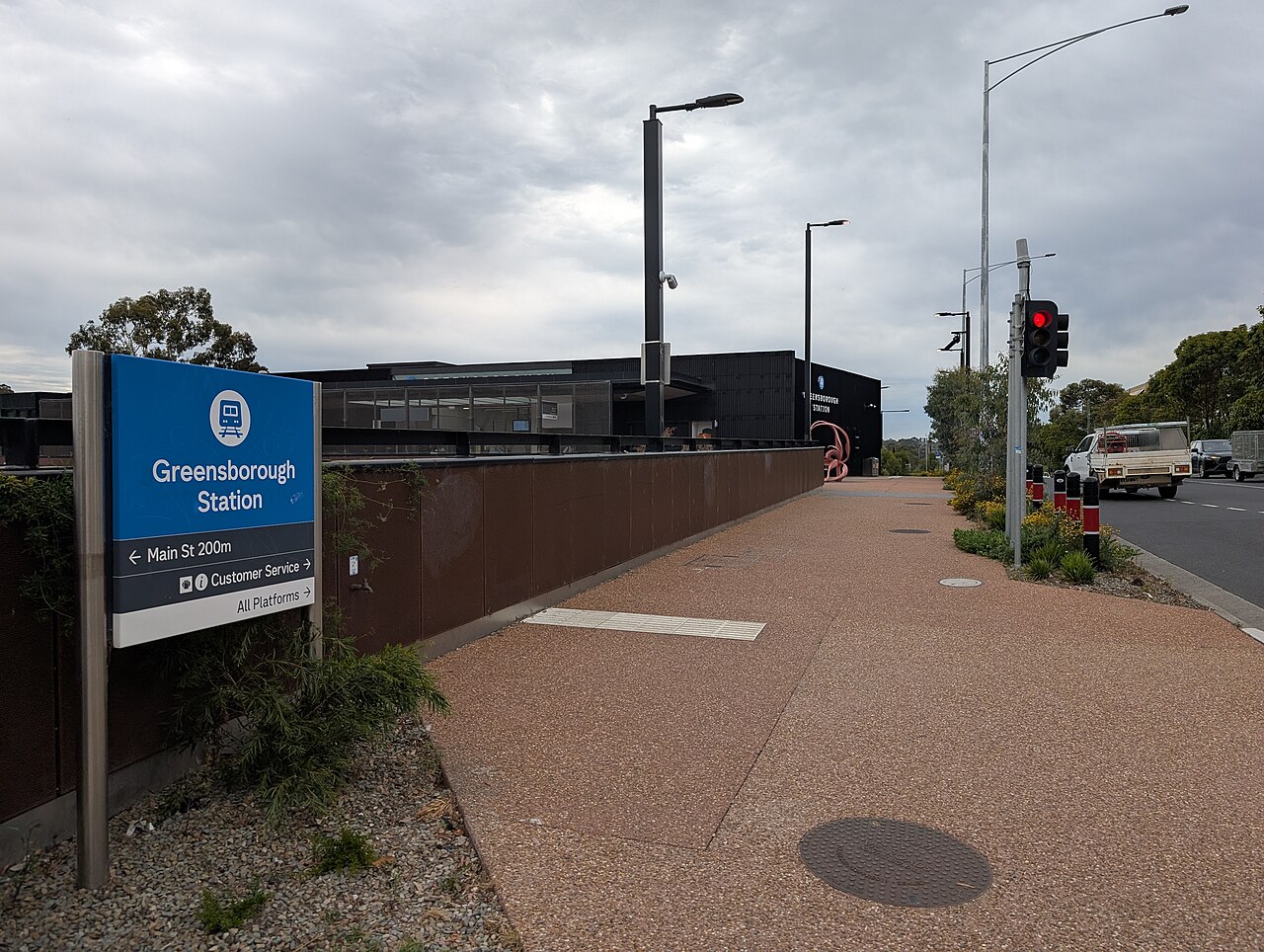
Transport is the main reality check. Plenty does not give you a neat station-village setup. Most residents drive to nearby stations or activity centres, commonly Diamond Creek, Greensborough, Eltham or surrounding bus-connected areas depending on the address. That means parking at home is important, parking at the station can become part of your morning calculation, and a two-car household is often more practical than a one-car household.
Two gotchas catch newcomers. First, quiet-looking roads can still be rat-runs when drivers are avoiding congestion elsewhere, so inspect outside the Saturday open-for-inspection window. Second, semi-rural ambience can come with practical maintenance: leaves, drainage, fencing, septic or stormwater quirks, fire-season clearing expectations and garden work that inner-suburb renters may not expect. Plenty rewards people who inspect slowly. Stand outside for five minutes, listen for road noise, check where visitors will park, and map the real route to groceries, school, work and takeaway before you fall for the block.
Signature Craving
Plenty’s craving scene is small, so the honest move is to stop pretending it competes with Eltham or Greensborough. The useful local bite is on Diamond Creek Road: Burger Road at 285 Diamond Creek Road is the easy fallback when moving boxes are still stacked and no one wants to cook. Phoenix & Co and Salmon Ponds give you proper sit-down options, Plentiful General Store covers the coffee-and-basic-supplies role, and Souvlaki GR is there for a quick kebab fix. That is enough for a practical weeknight, not enough for a restless diner who wants ten cuisines within a short walk. The upside is clarity. You will learn the local rotation quickly, and for bigger choice you drive out rather than pretending Plenty has a dense food strip.
Comparisons Table
| Suburb | Transport | Tier | Region |
|---|---|---|---|
| Plenty | D | North | outer-north-east |
| Arthurs Creek | n/a | North | outer-north-east |
| Bend of Islands | n/a | North | outer-north-east |
| Christmas Hills | F | North | outer-north-east |
Trust Block
Author: Jack Morrison — Bayside and west property correspondent. Walks every suburb he writes about.
Data: data/melbourne_suburbs_master.json (Codex per-LGA enumeration, cross-checked vs VEC + Australia Post + ABS SA2 boundaries), data/suburb_scores.json (composite percentile grades), data/venues/.json (OpenStreetMap + Gemini-verified venue catalog).
Last reviewed: 2026-05-26. Not financial advice. We do not accept paid placements in editorial.
FAQ
Q: Is Plenty a good suburb to move to in 2026? A: Yes, if you are moving for space, quiet, schools, greenery and a slower residential pace. Plenty works best for households that already accept a car-first life and do not need a train station, supermarket strip or late-night dining within walking distance. It is less convincing for renters who want apartment choice or young professionals who rely on public transport every day. The suburb’s strength is not convenience density; it is the ability to live with more room while staying within reach of Greensborough, Diamond Creek, Eltham and the northern road network.
Q: What should be on a Plenty moving checklist? A: Your checklist should go beyond the usual bond, utilities and removalist items. Check NBN at the exact address, not just the suburb. Drive your work commute during peak hour. Confirm whether garden maintenance is your job. Test mobile reception inside the house. Look at drainage after rain if the block is sloped. Check driveway turning space, visitor parking and bin access. If you have children, map the real school run. If you use the train, test the drive and parking routine to your preferred station before signing anything.
Q: Do you need a car in Plenty? A: For most households, yes. Plenty is not built around a station-front lifestyle, and daily errands are much easier with a car. Some addresses will have bus access or a workable route to nearby centres, but the suburb’s layout, larger blocks and limited local retail mean walking will not cover enough of everyday life for most people. A couple may be able to manage with one car if one person works from home, but families, shift workers and commuters should assume that car access will shape their week.
Q: Which parts of Plenty are best for quiet living? A: Generally, the quieter feel improves as you move away from the main road exposure around Diamond Creek Road and into more set-back residential pockets. That said, the best pocket depends on the exact address because some side streets still carry school, commuter or shortcut traffic. Do not judge from a midday inspection alone. Visit at 7:30 am, 5:30 pm and after dark if you can. Listen for traffic, check headlight sweep into bedrooms, and see whether the road feels like a local street or a through-route.
Q: Is Plenty good for families? A: Plenty can be very good for families that want more space and are comfortable driving. The suburb suits children who benefit from gardens, quieter streets and access to nearby schools, parks and sports options across the surrounding north-east. The catch is logistics. You need to plan school drop-offs, weekend sport, part-time work and social trips because teenagers may not have the same independence they would get near a train station or dense shopping strip. The family appeal is real, but it works best when parents are realistic about transport.
Q: Is Plenty affordable for renters? A: Plenty can look affordable on a 1-bedroom median, but that is misleading if you expect a deep rental pool. The smaller rental market is thin, and the suburb has far more family-style homes than compact apartments. A renter may find a decent price one month and almost no suitable listings the next. Families seeking houses should budget for competition around well-kept properties with good heating, cooling, fencing and manageable gardens. The better question is not only price; it is whether the right kind of property is available when you need it.
Q: What are the main downsides of moving to Plenty? A: The biggest downsides are transport dependence, limited rental variety, limited food and retail choice, and the practical maintenance that can come with larger blocks. If you are used to walking to a station, ordering from dozens of restaurants, or living in a lock-up-and-leave apartment, Plenty may feel inconvenient. Road noise near busier routes can also surprise people who inspected on a quiet weekend. Another downside is that beautiful properties can carry extra work: gardens, gutters, slope, drainage, fencing and driveway access all deserve close attention.
Q: How does Plenty compare with Diamond Creek or Greensborough? A: Diamond Creek and Greensborough generally offer more obvious daily convenience, especially around shops, stations and services. Plenty feels more residential and spacious, but it asks for more driving and more planning. If your priority is commute simplicity or a wider rental search, Greensborough or Diamond Creek may be easier. If your priority is land, privacy and a quieter home base, Plenty may justify the trade-off. The smart move is to inspect all three in the same week and compare the actual morning routine, not just the listing photos.
Q: What should buyers check before purchasing in Plenty? A: Buyers should check zoning, overlays, drainage, bushfire considerations, easements, building condition and the practical cost of maintaining the land. Larger blocks can be appealing, but they can also hide expensive issues: retaining walls, tree management, fencing, driveway repairs, stormwater problems and older heating or cooling systems. Order proper building and pest reports, ask council-specific questions, and walk the boundary rather than only touring the house. Also test the commute and local services from that exact street. In Plenty, the block is part of the purchase, not background scenery.