1. Verdict Box
Richmond in 2026 is the inner-east suburb where the vacancy story is louder than the yield story. The median house is $1,306,576 with weekly rent at $984 — that builds a 3.9% gross / 2.1% net yield. But the headline metric is the 1.0% vacancy rate. Functionally, that means properties priced at market re-let within 5-6 days, and the dollar weeks of rent actually collected are higher than other suburbs with similar nominal yields.
Units at $697,455 median and $616/week rent return 4.6% gross / 3.1% net. The unit story is stronger than the house story on yield, but the suburb’s pricing power runs both ways.
Honest verdict: Richmond is the inner-east tenant magnet. You buy here for the Victoria Street/Bridge Road/Swan Street triangle, the MCG proximity, and the Vietnamese-food gravitational pull. You do not buy here for cash flow on day one.
2. At-a-Glance Table
| Metric | House | Unit |
|---|---|---|
| Median price (Q1 2026) | $1,306,576 | $697,455 |
| Median weekly rent | $984 | $616 |
| Gross yield | 3.9% | 4.6% |
| Net yield (after costs) | 2.1% | 3.1% |
| Current vacancy rate | 1.0% | 1.0% |
| Council rates (annual) | $2,215 | ~$1,700 |
| Mortgage rate assumption | 6.2% IO | 6.2% IO |
| Holding cost (year 1 estimate) | -$13,600 | -$4,800 |
3. Who It Suits
Pippa, 38, single-income tech professional. Wants the inner-east postcode and the lowest vacancy risk available. Richmond’s 1.0% vacancy and proximity to East Richmond station makes the rent collection story near-bulletproof.
Hamish and Catherine, 44 and 42, both partners at professional services firms. Adding a third investment property to a portfolio of two Carlton units. Richmond house at $1.31M gives them inner-east diversification and stronger tenant demand than their Carlton stock.
Lukas, 51, sold a Sydney terrace and reallocating capital. Wants two Melbourne assets instead of one Sydney terrace. A Richmond house plus a Brunswick unit splits the income across postcodes while keeping inner-ring exposure.
4. Rent & Property Reality
Richmond rents have held up through every cycle since the 2020 shock. The $984/week house median and $616/week unit median are real; relistings on the Richmond Honest Guide 2026 and the Richmond Cost of Living guide suggest premiums of 6-9% on properties within walking distance of Bridge Road and Swan Street tram lines.
Cost stack that consumes your headline yield:
- Council rates: $2,215/year (Yarra City Council)
- Landlord insurance: $1,200-$1,800/year
- Property management (7-8% of rent): $3,837/year
- Maintenance allowance at 1%: $13,065/year for houses
- Vacancy buffer (2-4 weeks): $2,952/year — but realistically lower, given 1.0% vacancy
Net annual house income: $27,812. Net yield: 2.1%. The vacancy advantage lifts realised yield closer to the headline number than peer suburbs.
For the cross-suburb baseline, see the Melbourne Rent Prices by Suburb 2026 guide.
5. Local Reality & Pockets
Richmond is 2.6 km² and has four distinct rental sub-markets.
Victoria Street (the Vietnam Street strip): Lowest vacancy, highest tenant turnover. Single-fronted terraces in the West Richmond pocket clear within 4-5 days of listing. Body corporates non-existent on the terraces; on the apartment stock above the shopfronts, watch the strata budget.
Bridge Road (the tram spine): Premium house stock. Restored Victorians and Edwardians command $1,200-$1,500/week. This is the family-and-professional cohort.
Swan Street / MCG edge: Sports-and-events premium. Properties within 800m of the MCG see consistent demand from the corporate-and-events tenant pool. Higher tenant turnover but minimal vacancy.
Burnley / Cremorne tech precinct: The tech-cluster effect. Within walking distance of REA Group, MYOB and Carsales offices. Strong young-professional tenant demand and the newest stock in the suburb.
For street-by-street investor context, see the Richmond Budget Breakdown 2026, and for the food-and-culture amenities that drive the rent premium, the Best Asian Food in Richmond 2026 and Richmond Cheap Eats Under $20 guides.
6. Signature Craving
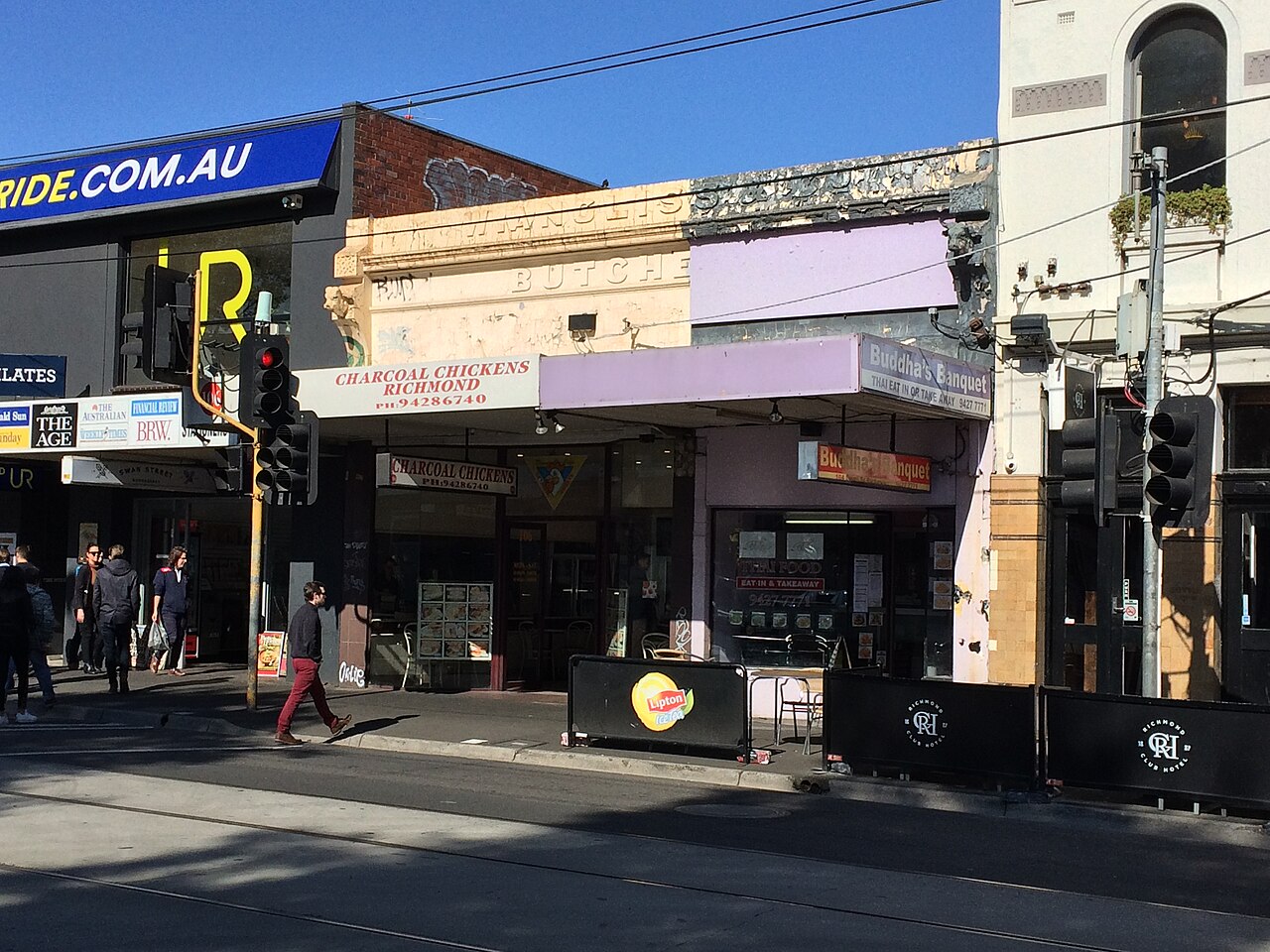
The Richmond tenant signature is Victoria Street, Richmond VIC 3121, running from Hoddle Street to Church Street. Vietnamese pho, banh mi, grocers, and the late-night strip that pulls dwell time even on Tuesdays. Properties within 400m of Victoria Street consistently re-let inside 6-8 days at $40-$70/week premiums versus equivalent stock east of Church Street.
For the on-the-ground food evidence behind that premium, see Best Takeaway in Richmond — the takeaway density on Victoria Street is genuinely part of why those rents hold.
7. Comparisons Table
| Suburb | House Yield | Unit Yield | Median House | Vacancy |
|---|---|---|---|---|
| Richmond | 3.9% | 4.6% | $1,306,576 | 1.0% |
| Collingwood | 3.6% | 4.7% | $565,174 | 1.9% |
| Fitzroy | 4.5% | 5.7% | $1,675,854 | 1.9% |
| Brunswick | 3.5% | 4.8% | $873,278 | 1.3% |
| Carlton | 3.7% | 4.2% | $1,968,548 | 2.1% |
| Melbourne average | 3.2% | 4.1% | — | ~2.0% |
| Toorak | 2.7% | 4.3% | $3.5M+ | ~1.5% |
Richmond’s 1.0% vacancy is the standout. No other inner-ring suburb is collecting more weeks of rent per year per property.
8. Trust Block
Author: Ethan Cole — Melbourne infrastructure reporter tracking the city’s development corridors since 2017, with a particular focus on inner-east commercial-to-residential conversions.
Sources:
- CoreLogic Q1 2026 median sale and rent figures.
- Domain Group rental listing data, cross-checked April 2026.
- Yarra City Council 2025-26 rates schedule for postcode 3121.
- RBA February 2026 standard variable owner-occupier rate as the 6.2% interest baseline.
- REIV monthly rental vacancy statistics for inner-east Melbourne.
This article is information only, not financial advice. Yields, rates and council charges move every quarter. Confirm current numbers with a licensed mortgage broker, buyer’s advocate or accountant before transacting.
9. FAQ
Q: Is Richmond a good rental yield suburb in 2026? On nominal gross yield (3.9% house, 4.6% unit), Richmond is mid-tier for the inner ring. But on realised yield — accounting for the 1.0% vacancy — Richmond outperforms most inner-ring peers because more weeks of rent are actually collected.
Q: Why is Richmond’s vacancy so low? A combination of the Victoria Street tenant draw, the Burnley/Cremorne tech precinct on the south side, MCG and sports infrastructure on the north, and three tram corridors feeding the CBD.
Q: How much deposit do I need for a Richmond unit at $697k? A 20% deposit is $139,491. Add Victorian stamp duty of around $35,000 (no investor concession), plus $3,000-$5,000 in legal, building, pest and lender fees. Budget around $180,000 cash-in to settle. A 10% deposit with LMI lowers cash to roughly $108,000 but adds about $14,000 to the loan.
Q: Are Richmond unit yields higher than houses? Yes — 4.6% units vs 3.9% houses. Same structural reason as Fitzroy and Brunswick. Smaller land share, higher rent per dollar of asset value.
Q: Is Richmond cash-flow positive at current rates? No. House interest at 6.2% IO is $64,806 against $51,168 of annual rent — negative on interest alone. Units are closer to neutral but still need to be funded.
Q: What is the realistic vacancy risk? 1.0% as of Q1 2026 — the tightest in the inner-east. Properties priced to market re-let inside 5-6 days. Vacancy risk is mispricing the relisting, not finding tenants.
Q: Which streets command the highest rents? The Bridge Road tram spine; the Victoria Street terrace pocket; the MCG-proximity Swan Street strip; and the Burnley/Cremorne tech cluster. East of Church Street rents step down 8-12%.
Q: How does Richmond compare to Fitzroy or Collingwood for an investor? Lowest vacancy of the three. Entry price between Collingwood and Fitzroy. Tenant covenant is the strongest in the inner-east, and the tech-cluster employment story isn’t going away.
Q: What is the 5-year scenario on a Richmond unit? Assuming 3.5% capital growth (consistent with Richmond’s 10-year average) and rents tracking CPI, a $697k unit becomes roughly $828k by 2031. Net rental income compounds on top — Richmond is a yield-plus-growth play, not a pure yield play.
For comparison context, see the Coburg rent report, Kensington rent report, Balaclava rent report, Melbourne CBD rent report, South Melbourne rent report, and the Prahran Chapel Street premium.