If you’re shopping for apartments for sale in Southbank, Melbourne, here’s the honest number to anchor on: the median unit price is around $505,000, with roughly 598 units sold over the past year and a gross rental yield near 6.9% — one of the highest in inner Melbourne. That high yield is not a gift. It’s the market pricing in the thing nobody on a glossy display-suite brochure will tell you: Southbank has been the textbook oversupplied apartment market in Australia for almost two decades, and that has kept capital growth flat (about +0.83% over the past 12 months to March 2026).
So this is a suburb you buy with your eyes open. Done right, Southbank gives you a 1km walk to the CBD, a balcony over the Yarra, and rent that covers most of your mortgage. Done wrong, you buy a near-identical glass box in a 60-storey tower with $4,000-a-quarter owners corporation fees and no land underneath it. This guide is for the owner-occupier who wants to live two tram stops from work, and the investor chasing yield — and it’s blunt about which towers and trade-offs are worth it.
What you actually get for the money in Southbank
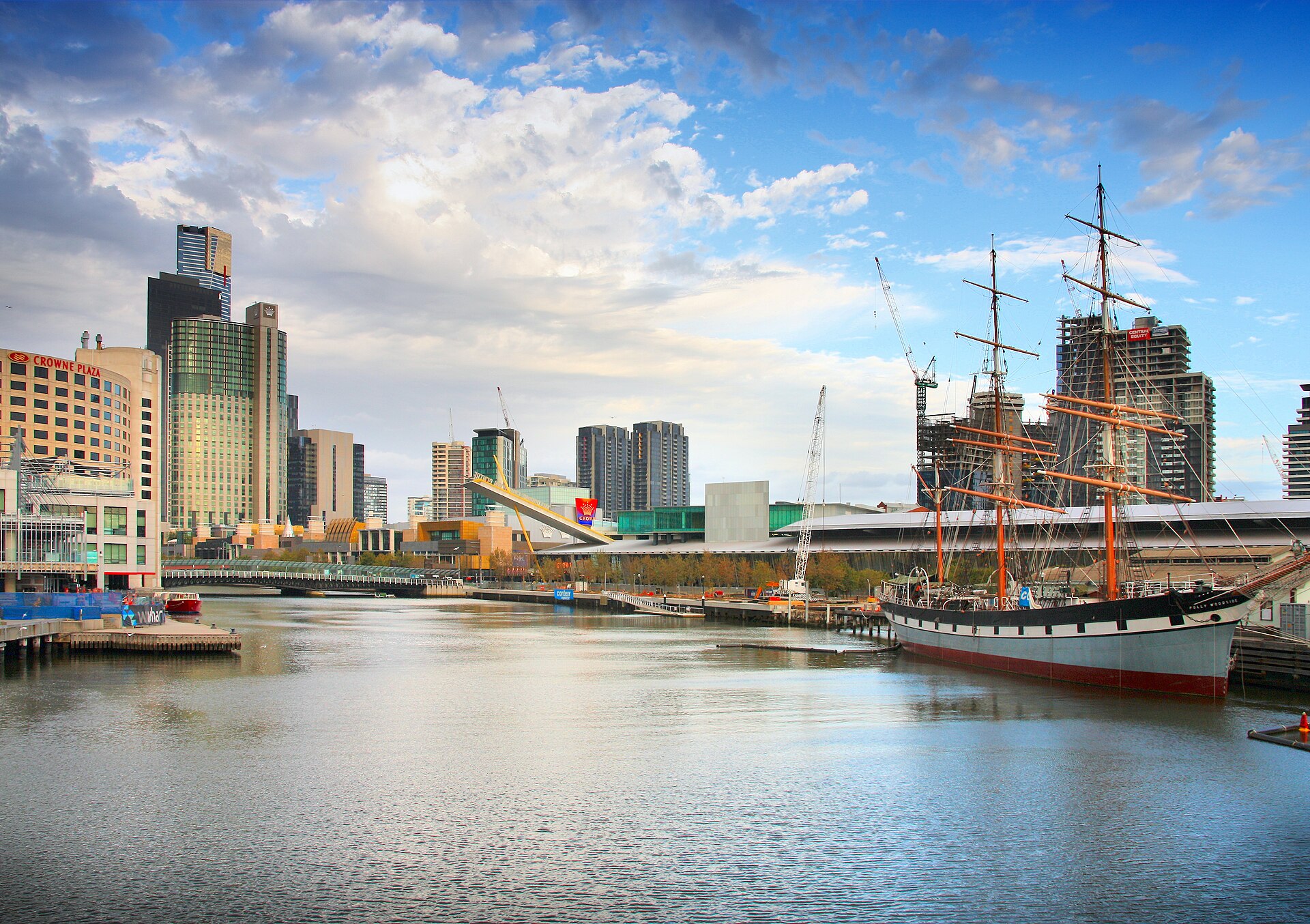
Southbank is the strip of high-rise between the Yarra River and St Kilda Road, bordered by City Road, Kings Way and Sturt Street, sitting 1km south of the CBD. It is one of the most densely populated pockets in the country — the 2021 census counted 22,631 residents at roughly 14,100 people per square kilometre. Translation: it’s almost entirely apartments, and almost everything for sale is a one- or two-bedder in a tower.
Here’s the broad price map for 2026, based on the suburb’s $505,000 unit median and current listings:
- 1-bedroom apartment: roughly the high-$300Ks to mid-$400Ks, depending on tower, floor and outlook. Older 1990s–2000s stock is cheaper; a new build in Melbourne Square costs more.
- 2-bedroom apartment: mostly $500K–$750K, with river-facing or high-floor stock in Eureka Tower, Freshwater Place or Australia 108 pushing well above that.
- 3-bedroom / sub-penthouse: a different market entirely — these run past $1M and trade slowly.
The named towers matter because they set the floor and ceiling on price and quality. Eureka Tower (91 floors, completed 2006) and Freshwater Place (2005) are the established blue-chip addresses near Riverside Quay. Australia 108 — the 100-storey, 317m tower that’s now Melbourne’s tallest to its highest floor — and the twin Melbourne Square towers are the newer prestige stock. Prima Pearl sits in the same cluster. Older 2000s towers along City Road and Power Street are where the cheapest entry-level 1-bedders live.
The oversupply problem you have to price in
I won’t sugarcoat this, because pretending otherwise is how people lose money here. For nearly twenty years, tower after tower has delivered near-identical apartments into Southbank faster than the population and incomes could absorb them. When supply outruns demand, you don’t get price growth — you get stagnation. That’s exactly what the data shows: capital growth of under 1% over the past year, while detached houses in Melbourne’s middle ring kept climbing.
What that means for a buyer:
- Don’t buy for capital growth. Buy Southbank for the lifestyle (owner-occupier) or the yield (investor), not because you expect the apartment to double. It probably won’t keep pace with a house.
- Off-the-plan is the riskiest version of this. New stock competes directly with the dozens of near-identical apartments listed two floors up. There were around 160 new and off-the-plan apartments listed alongside ~1,800 existing units — you are rarely scarce here.
- Scarcity is your friend. The apartments that hold value are the ones with something the next tower can’t replicate: a genuine river view, a larger floor plate, a low-density boutique block, or a floor high enough to clear the surrounding rooftops.
Owners corporation fees: the number that breaks the maths
This is where Southbank trips up first-time apartment buyers. The towers that make the suburb desirable — lifts, concierge, pools, gyms, building managers, complex mechanical systems — are also the towers with the highest strata costs in Victoria. Large high-rise complexes (60+ lots) commonly charge $1,800 to $5,000+ per quarter in owners corporation (OC) fees.
On a 2-bedder, $4,000 a quarter is $16,000 a year — which can wipe out a chunk of that headline 6.9% yield. Before you sign anything in Southbank:
- Get the OC fees in writing and the last two AGM minutes. Recurring complaints, special levies for facade or balcony rectification, or a fund that’s running dry are red flags.
- Confirm the OC manager is registered with Consumer Affairs Victoria.
- Check the special-levy history. Older towers occasionally hit owners with five-figure rectification levies for waterproofing or cladding — your conveyancer should flag this.
A cheap-looking 1-bedder with a $1,200/quarter levy can be a better buy than a slightly cheaper one with a $2,500 levy. Always compare the all-in cost, not the sticker price.
Southbank rent: what it costs to live here (and what it earns)
If you’re renting first — sensible, given the flat growth — or working out an investment case, the rental side of Southbank is its strongest argument.
- Median apartment rent: around $700 per week.
- 1-bedroom apartments typically list around $560–$695 per week.
- 2-bedroom apartments typically list around $600–$810 per week.
- Gross rental yield on units: roughly 6.9% — well above most inner Melbourne suburbs.
- Days on market for sales sits around 42–44 days, so neither buyers nor sellers are in a frantic rush.
That yield is why investors keep coming back despite the flat growth: the rent does a lot of heavy lifting. The catch is the same oversupply story — a flood of comparable rentals means you compete hard for tenants, and the renter pool skews heavily toward students and young professionals (the suburb’s demographic is dominated by 20–39-year-olds, with large Indian, Chinese and Colombian communities). A river-view 2-bedder rents itself; a dark, low-floor 1-bedder facing another tower’s wall sits empty longer.
Who Southbank actually suits
Buy here if you’re an owner-occupier who works in or near the CBD. The 1km walk to Flinders Street, tram routes 1, 12, 58, 96 and 109 at your door, the Arts Precinct (NGV, Arts Centre, ACCA, Malthouse Theatre), and the Southbank Promenade restaurants are the real product. You’re paying for a lifestyle you’ll use every day, and the flat capital growth matters less when you’re not selling.
Buy here as an investor if you want yield, not growth. The ~6.9% gross yield is genuinely strong, but model it after OC fees, vacancy risk and a realistic rent — not the brochure number.
Think twice if you expect the apartment to be a growth asset. For capital growth, a house or townhouse in Melbourne’s middle ring has a far better track record. Southbank is a cash-flow and lifestyle play, not a growth play.
How to buy smart in Southbank in 2026
This is a buyer’s market — sellers outnumber buyers, and you have time. Use it.
- Prioritise scarcity: river views, high floors, larger floor plates, boutique low-density blocks. Avoid the generic mid-floor box that 200 identical units compete with.
- Read the OC like a prospectus: fees, AGM minutes, sinking fund, special-levy history.
- Inspect the outlook in person: Southbank towers can have a “view” that’s the side of the next tower. Stand in the actual apartment, not the display suite.
- Negotiate hard: with ~42-day average days-on-market and oversupply, there’s no premium for moving fast. Low-ball offers on stale listings are routine here.
- Run the all-in numbers: mortgage + OC fees + council rates + water, against realistic rent. The yield only counts after the costs.
Frequently Asked Questions
What is the median price for apartments in Southbank Melbourne? The median unit price in Southbank (VIC 3006) is approximately $505,000 based on around 598 sales over the 12 months to March 2026. One-bedroom apartments typically sit in the high-$300Ks to mid-$400Ks, and two-bedroom apartments mostly range from $500,000 to $750,000, with premium river-view and high-floor stock costing more.
Is Southbank a good place to buy an apartment in 2026? It depends on your goal. Southbank offers a strong rental yield (around 6.9%) and a 1km walk to the CBD, which suits owner-occupiers and yield-focused investors. However, capital growth has been roughly flat (about +0.83% over the past year) due to long-running apartment oversupply, so it’s a cash-flow and lifestyle play rather than a growth investment.
How much is rent for an apartment in Southbank? The median apartment rent in Southbank is around $700 per week. One-bedroom apartments typically list around $560–$695 per week, and two-bedroom apartments around $600–$810 per week. The gross rental yield on units is approximately 6.9%, one of the highest in inner Melbourne.
What are owners corporation fees like in Southbank apartments? Southbank has some of the highest owners corporation (strata) fees in Victoria. Large high-rise towers with lifts, concierge, pools and gyms commonly charge $1,800 to $5,000+ per quarter. Always request the fees in writing plus recent AGM minutes and the special-levy history before buying, as high fees can significantly reduce your effective rental yield.
Why is Southbank’s rental yield so high but capital growth so low? Southbank has been heavily oversupplied with near-identical apartments for almost two decades. When supply grows faster than population and income, prices stagnate rather than rise — hence the sub-1% capital growth. At the same time, strong rental demand from students and young professionals keeps rents solid, producing the high ~6.9% gross yield. Investors get cash flow, not growth.
Which Southbank towers are the most sought-after? Established blue-chip addresses include Eureka Tower (91 floors, completed 2006) and Freshwater Place (2005) near Riverside Quay. Newer prestige stock includes the 100-storey Australia 108 (Melbourne’s tallest to its highest floor at 317m) and the twin Melbourne Square towers. Prima Pearl sits in the same cluster. Apartments with genuine river views or high floors tend to hold value best.
Sources: Domain — Southbank VIC 3006 suburb profile & listings; Your Investment Property Magazine — Southbank VIC 3006 suburb report (CoreLogic data to March 2026); Wikipedia — Southbank, Victoria; Wikipedia — Eureka Tower; Wikipedia — List of tallest buildings in Melbourne; Strata Fee Calculator — Average strata fees in Melbourne 2026; Investment Property Melbourne — apartment oversupply warning; Wise Real Estate Advice — buying an apartment in Melbourne 2026.