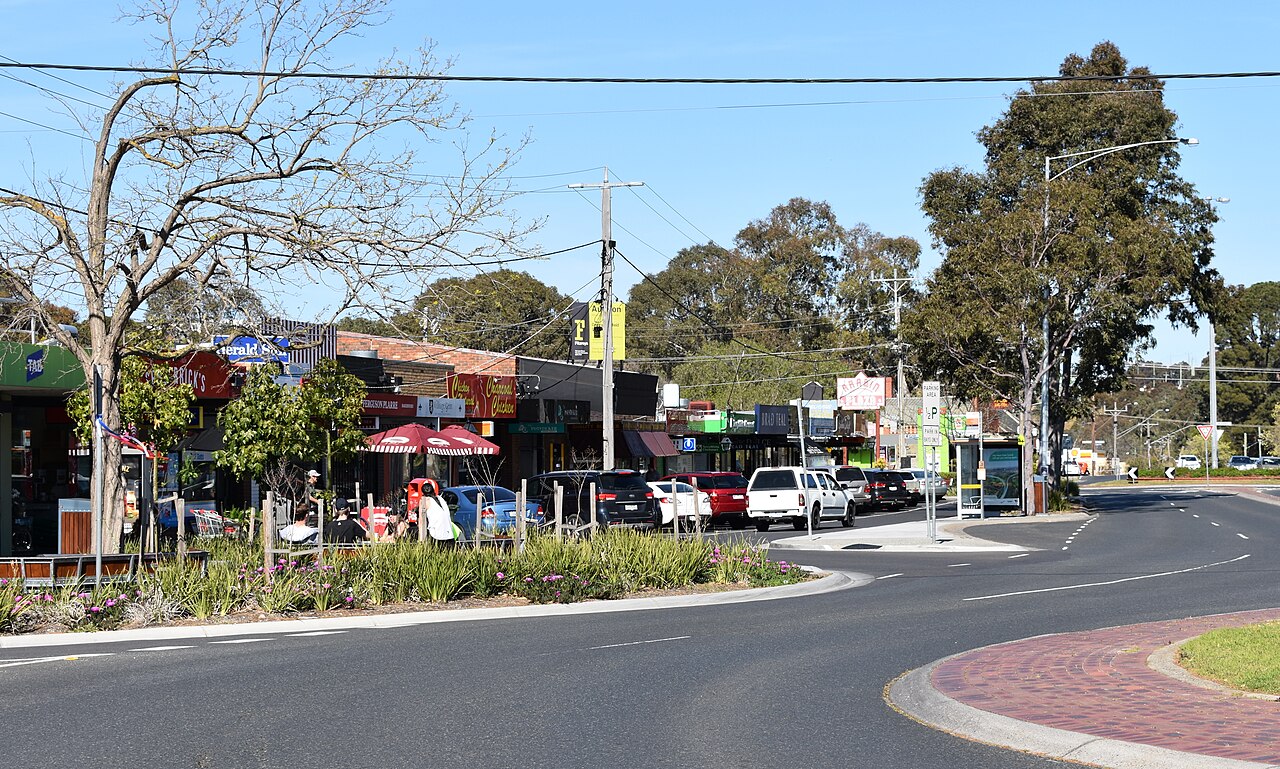
Verdict Box
Best for / renters and buyers who want a train, serious Vietnamese food, older brick houses, and a price tag that still makes sense west of Sunshine. Skip if / you need polished streetscapes, quiet station-adjacent nights, easy CBD driving, or a school-zone prestige play. Rent pressure / the cheap label is fading. One-bedroom units still sit around $350 a week, but clean homes near St Albans station, Ginifer station, Main Road East, or Alfrieda Street get chased hard. Commute reality / the train works better than the car. Peak driving via Ballarat Road or the Ring Road can turn ugly fast. Food scene / one of the strongest everyday eating strips in the west, especially around Alfrieda Street and Main Road East. Family fit / good for practical families who inspect street-by-street, not suburb-by-suburb. Overall score / 7.2/10: undervalued, useful, noisy in parts, and much less simple than the price guides suggest.
At-a-Glance Table
| Factor | St Albans 2026 |
|---|---|
| LGA | Brimbank City Council |
| Postcode | 3021 |
| Geographic tier | West |
| Region | middle-west |
| Transport grade | N/A |
| Overall grade | D |
Who It Suits
Linh, 31, hospital worker — wants train access, late food, and rent that does not swallow the whole roster. The Renovator Family — can handle an older house, a busy road nearby, and a few years of fixing things properly. Arun, 42, western suburbs realist — values Sunshine, Footscray, the Ring Road, and a backyard more than suburb branding.
Rent & Property Reality
$350 a week is the current median 1-bedroom unit rent on Domain, while REA’s March 2026 rental report puts Melbourne unit rents up 5.3% year-on-year. That is the cleanest way to read St Albans in 2026: still cheaper than much of Melbourne, no longer easy if you want the tidy, walk-to-station version.
The marketing version says St Albans is affordable, connected, and food-rich. The renter version is harsher. The low headline rent usually means a small older flat, dated heating and cooling, limited storage, shared driveway pain, or a location that looks close to everything on a map but feels annoying at 7.40am. The better one-bedroom stock sits near St Albans station, Ginifer station, Main Road East, or the Alfrieda Street shops, and those listings do not behave like bargain leftovers. They get inspected by singles, couples, hospital workers, students, and people priced out of Sunshine.
For houses, Domain is showing median rents around $500 for 3-bedroom houses and about $598 for 4-bedroom houses. That matters because a lot of St Albans buyers are competing with renters who want the same thing: an older freestanding home with a driveway, a usable backyard, and enough space for multigenerational living. The cheap-looking house is often cheap because the bathroom is tired, the windows leak heat, the kitchen has been patched instead of renovated, or the block sits on a road you will hear every night.
The rent test here is not only weekly price. Ask what the home costs to live in. Older brick veneer homes can be cold in winter and hot in February. Some rear units have poor natural light and awkward turning space. Some renovated townhouses look clean but give you one split system for a whole living level and bedrooms that cook upstairs. A $20-a-week saving can disappear through power bills, rideshares after late trains, or the second car you need because the pocket is technically St Albans but not practical on foot.
If you are applying, move fast but do not panic-apply. Check the walk from the station at night, not only on inspection Saturday. Open cupboards for damp. Test mobile reception inside the bedrooms. Stand outside for ten minutes and listen. In St Albans, the wrong micro-location is the expensive part.
Local Reality & Pockets
St Albans has to be bought and rented by pocket, not by postcode. The most useful areas are the ones that let you live without driving for every errand: around St Albans station, East Esplanade, Alfrieda Street, Main Road East, and the better residential streets behind those strips. That is where the suburb makes sense. You can train into town, buy dinner without planning it, get to services quickly, and still pay less than many suburbs with weaker transport.
The trade-off is noise and friction. Anything too close to Alfrieda Street, Main Road East, Main Road West, St Albans Road, Furlong Road, Taylors Road, or Sunshine Avenue needs a harder inspection. Road noise, hoon traffic, truck movement, awkward turning, and visitor parking can all change how the home feels. A unit that looks calm at 11am may be a different place during school pick-up, Friday dinner rush, or peak train times.
East of the station is often the easier daily-life bet for people who want food, station access, and shorter walks. West of the rail line can still be good value, but you need to test crossings and car routes. Locals complain for a reason about getting across the suburb at the wrong time, especially around St Albans Road and Furlong Road near Ginifer. If your commute relies on a quick hop over the rail corridor, do that drive in peak hour before you bid or sign.
For quieter family streets, inspect the residential pockets away from the main strips: the streets feeding into parks and schools can be solid, but quality changes house by house. Older homes may have asbestos-era materials, tired roofs, patchy drainage, ancient switchboards, and garages that are really storage sheds. Rear townhouses can solve the noise problem but create another one: cramped driveways, no street parking for guests, and bedrooms staring into fences.
Two St Albans gotchas catch newcomers. First, parking near the activity centre is more contested than outsiders expect, especially around Alfrieda Street and the station. Second, not every cheap house is a bargain. Some are cheap because they sit on a noisy road, have poor insulation, or need the kind of maintenance that turns an affordable purchase into a slow renovation project.
Signature Craving
The move-in test for St Albans is dinner on Alfrieda Street after a bad commute. If you still like the suburb then, you probably understand it. Start with Quang Vinh at 66 Alfrieda Street when you want the classic local answer: fast, direct, filling, and not pretending to be inner-north dining. Dessert Story at 24 Alfrieda Street is the after-dinner tell; if the street feels too chaotic for you at night, listen to that instinct before signing a lease nearby. Main Road East gives you the other side of the routine, with Ái Huê at 306, Nando’s at 329, and Il Padrino at 322. The food is a major reason people forgive the suburb’s rougher edges, but it also brings traffic, parking pressure, and weekend noise close to the station core.
Comparisons Table
| Suburb | Transport | Tier | Region |
|---|---|---|---|
| St Albans | N/A | West | middle-west |
| Albanvale | n/a | West | middle-west |
| Albion | A+ | West | middle-west |
| Ardeer | D+ | West | middle-west |
Trust Block
Author: Jack Morrison — Bayside and west property correspondent. Walks every suburb he writes about.
Data: data/melbourne_suburbs_master.json (Codex per-LGA enumeration, cross-checked vs VEC + Australia Post + ABS SA2 boundaries), data/suburb_scores.json (composite percentile grades), data/venues/.json (OpenStreetMap + Gemini-verified venue catalog).
Last reviewed: 2026-05-26. Not financial advice. We do not accept paid placements in editorial.
FAQ
Q: Is St Albans actually affordable in 2026? A: Yes, but only if you define affordable honestly. A one-bedroom unit around $350 a week is still cheaper than many train-served Melbourne suburbs, and 3-bedroom houses around the $500 mark remain relatively accessible. The catch is quality. The cheaper rentals often have dated kitchens, limited insulation, old heating, poor storage, or awkward parking. For buyers, the cheaper houses may need roof, drainage, electrical, or bathroom work. St Albans is affordable compared with stronger-branded suburbs, but it is not automatically cheap to live in.
Q: Which pockets of St Albans should I favour? A: For daily convenience, favour walkable pockets around St Albans station, East Esplanade, Alfrieda Street, Main Road East, and the residential streets close enough to use the shops without living directly above the noise. If you use Ginifer station, test the walk and the road crossings before committing. Families often do better one or two streets back from the main roads, where you still get access but less traffic. The best St Albans pocket is usually a quiet street near transport, not the cheapest address on a major road.
Q: Which areas should I be more careful with? A: Be careful with homes fronting or sitting very close to Main Road East, Main Road West, St Albans Road, Furlong Road, Taylors Road, and Sunshine Avenue. That does not make them bad buys, but they need a discount and a proper noise check. Also be cautious with station-adjacent units that have limited parking, rear townhouses with tight driveways, and older homes that have been cosmetically dressed for sale. In St Albans, the wrong road exposure can matter more than an extra bedroom.
Q: How is the commute from St Albans to the CBD? A: The train is the honest answer. St Albans sits on the Sunbury line, and a rail commute to the city is usually far more predictable than driving. Budget roughly 30 minutes to Southern Cross or the central city by train once you include waiting and platform time, and more if you need a tram or office-end walk. Driving can look fine outside peak, then fall apart through Ballarat Road, Sunshine, Footscray approaches, or the Western Ring Road depending on where you work.
Q: Is St Albans good for families? A: It can be, but families need to inspect more carefully than singles. The suburb has schools, parks, trains, shops, and family-sized homes at prices that still compete well across the west. The trade-off is uneven street quality. Some pockets are calm and practical; others deal with through-traffic, parking stress, or tired housing stock. School choice should be checked address-by-address through the Victorian school zone tool, especially if you are comparing St Albans Secondary College, nearby primary schools, or options across Brimbank.
Q: What school-zone trade-offs should buyers know? A: Do not buy in St Albans assuming one school outcome from the suburb name alone. Government school eligibility in Victoria depends on the actual address, and St Albans has several nearby primary and secondary options, including St Albans Secondary College and Victoria University Secondary College campuses in the broader area. The trade-off is that the better house for transport may not be the best address for your preferred school. Check the zone first, then inspect the street. Do not let an agent’s casual school comment replace the official zone check.
Q: What are the five inspections people skip and regret? A: First, do the peak-hour drive, especially around St Albans Road, Furlong Road, Main Road East, and Sunshine Avenue. Second, walk from the station after dark and see how you feel. Third, test parking at dinner time near Alfrieda Street or Main Road East if the property relies on street spaces. Fourth, inspect for damp, roof age, old wiring, and weak heating in older houses. Fifth, open and close the driveway or garage setup properly. Tight rear-unit access becomes a daily irritation fast.
Q: Is it safe around the station and Alfrieda Street? A: It is usable and busy, but it is not the same as living on a quiet cul-de-sac. Around the station and Alfrieda Street you get food, trains, people, traffic, and late movement in the same small area. Some buyers love that convenience; others find the loitering, noise, and parking pressure wearing. The right test is personal: visit on a weeknight, a Friday night, and a Saturday lunch period. If you feel tense each time, choose a quieter street further back.
Q: Should I buy a house or a townhouse in St Albans? A: A house gives you land, flexibility, parking, and renovation upside, but it may also bring older-building problems and bigger maintenance bills. A townhouse can be easier to manage and newer inside, yet many St Albans townhouse projects have tight driveways, small bedrooms, limited storage, and body corporate costs. If you want long-term family use, an older house on a quieter street can make sense if the building report is clean. If you want low maintenance, choose the townhouse with the best light, parking, and insulation, not just the newest kitchen.