St Kilda sits in Melbourne’s inner south — a suburb that runs beachside, eclectic, faded glamour. Here’s what the numbers and the locals actually say about the property and rental situation.
Rental Prices — St Kilda 2026
| Property Type | Weekly Rent | Monthly | Annual |
|---|---|---|---|
| 1-bedroom unit | $567/wk | $2457/mo | $29,484/yr |
| 2-bedroom unit | $752/wk | $3258/mo | $39,104/yr |
| 3-bedroom house | $926/wk | $4012/mo | $48,152/yr |
Rents in St Kilda have fluctuated slightly compared to 2025. The vacancy rate sits at 2.0%, which is moderate — you have some negotiating room.
Property Prices
| Property Type | Median Price | 12-Month Change |
|---|---|---|
| House | $1,640,964 | +2.7% |
| Unit/Apartment | $759,933 | -1.2% |
Gross rental yield: 4.4% (units tend to yield higher than houses in St Kilda).
Who Lives Here
St Kilda attracts a diverse mix of demographics. The suburb is known for Luna Park, Esplanade, cake shops, Sunday market.
Average resident profile:
- Age: Predominantly 35-55
- Household: Young professionals and sharehouse groups
- Income: Below metro average
Renting Tips for St Kilda
- Apply fast. Good properties in St Kilda get 20-40 applications. Have your documents ready: 100 points of ID, recent payslips, rental history, references.
- Inspect in person. Photos lie. Check water pressure, phone reception, natural light at the time of day you’d actually be home. Open the cupboards. Flush the toilet.
- Look beyond Fitzroy Street. The main strip is where rent premiums hit hardest. One or two blocks back, you get the same proximity for less money.
- Know your rights. Victorian tenancy law caps rent increases to once per 12 months. Your landlord must give 60 days notice. Urgent repairs must be addressed within 48 hours (blocked toilet, no hot water, gas leak).
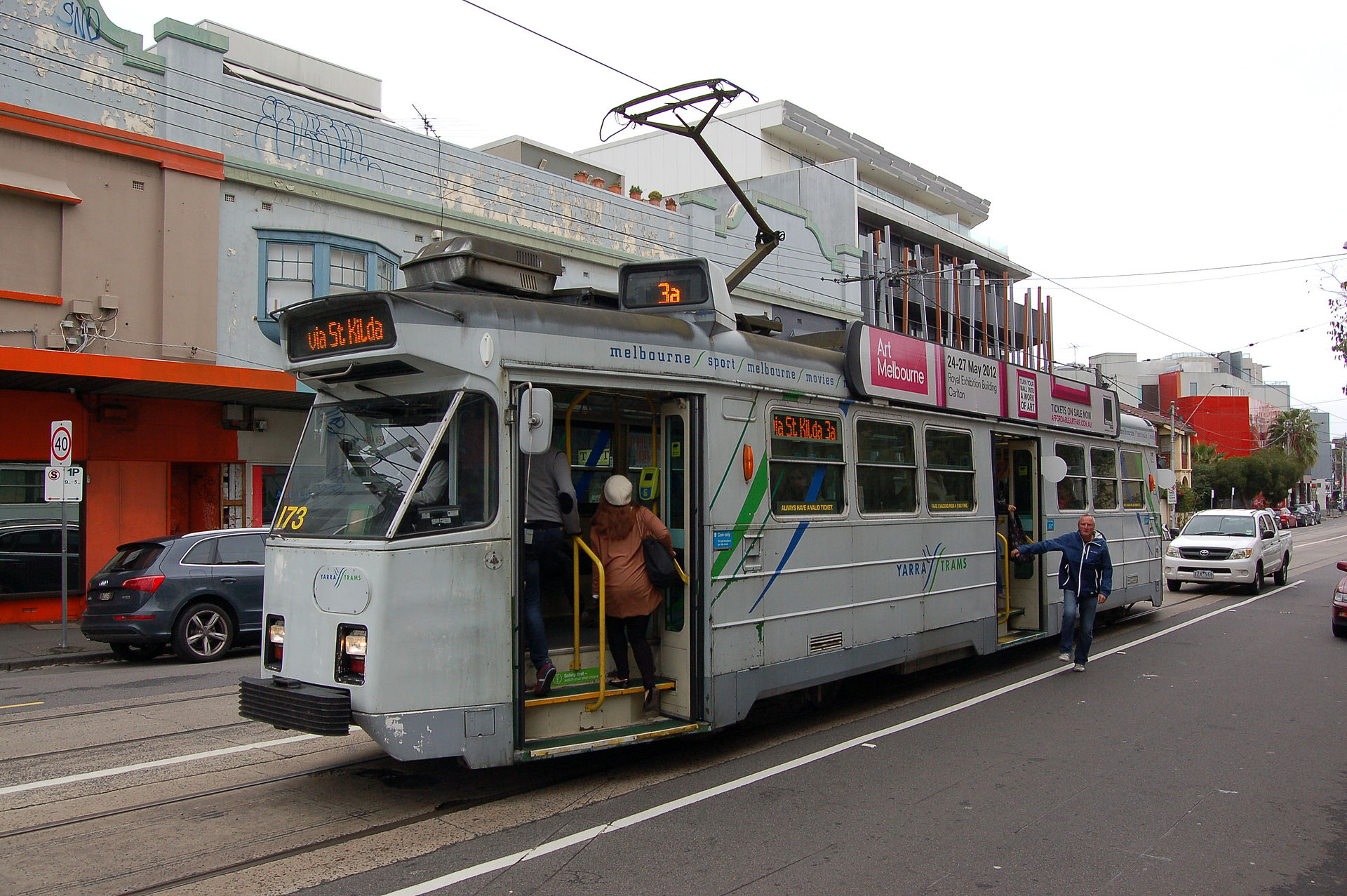
- Budget beyond rent. Factor in: utilities ($150-250/month), internet ($70-90/month), contents insurance ($15-25/month), and transport (Tram 96 (Acland St), Tram 16 (Fitzroy St)).
Investment Outlook
St Kilda is a mature market — don’t expect explosive growth, but it’s stable and liquid. The 4.4% gross yield is above the metro average.
Key factors:
- Transport: Tram 96 (Acland St), Tram 16 (Fitzroy St)
- Schools: Limited local options — neighbouring suburbs have better schools
- Infrastructure: New town centre development approved
Suburb Character & Lifestyle
St Kilda runs beachside, eclectic, faded glamour. The main commercial strip along Fitzroy Street is where most of the daily life happens — cafes, restaurants, and essential services within walking distance for those who live close. The neighbourhood is known for Luna Park, Esplanade, cake shops, Sunday market, which drives both rental demand and property values.
The housing stock is predominantly post-war homes with newer medium-density developments filling former industrial sites. For renters, the most common options are standalone units behind older houses. For buyers, the entry point is typically a 2-bedroom terrace needing renovation at the lower end of the market.
Transport reality: Tram 96 (Acland St), Tram 16 (Fitzroy St). The commute to the CBD is realistic for daily workers, and most residents report using a combination of public transport, cycling, and driving depending on the trip.
Cost of Living Snapshot
| Expense | Typical Cost |
|---|---|
| Coffee | $5.00-5.50 |
| Brunch | $22-32 |
| Dinner out | $35-55 pp |
| Pint of beer | $13-15 |
| Cocktail | $22-28 |
| Groceries | $111/wk (couple) |
| Utilities | $166/mo (1br) |
| Internet | $70-90/mo (NBN) |
The Bigger Picture
St Kilda has seen consistent demand from owner-occupiers and investors alike, driven by lifestyle amenity and transport links. The suburb is beachside, eclectic, faded glamour, which attracts investors looking for reliable yield in an improving area.
5-year outlook: Moderate, steady capital growth expected. The fundamentals — location, transport, lifestyle amenity — are strong.
What to watch: New apartment developments may increase supply.
Nearby
Last updated: March 2026. Data sources: Domain, REA Group, SQM Research.
Keep Exploring
More in this area:
- Property Market in St Kilda
- Rental Market in St Kilda
- Rent Guide in St Kilda
- Investment Guide in St Kilda
Nearby suburbs:
Useful tools:
Data-Backed Buyer View
St Kilda is not a cheap-house suburb, but it can still work for first home buyers targeting apartments. Domain lists St Kilda’s 1-bedroom unit median at $395,000, 2-bedroom units at $620,000, and 3-bedroom units at $905,000. Houses are a different market: 2-bedroom houses sit around $1.0775 million, while 3-bedroom houses are about $1.65 million.
Compared with Melbourne’s March 2026 medians of $1,082,728 for houses and $611,182 for units, St Kilda’s entry-level unit market is the practical first-home path. A 1-bedroom unit is roughly $216,000 below the Melbourne unit median, while a 2-bedroom unit is almost level with it. A 3-bedroom St Kilda house, however, is about 52% above the Melbourne house median. Source: Domain.
First Home Buyer Checklist
- Set your ceiling before inspections. In St Kilda, decide whether you are buying a lifestyle apartment under $600,000, stretching to a 2-bedroom unit around $620,000, or leaving the suburb for a house.
- Check Victorian first home buyer duty rules. Full stamp duty exemption generally applies up to $600,000, with a concession up to $750,000 for eligible buyers. That makes the $600,000 to $750,000 band especially sensitive.
- Compare strata costs, not just price. Older St Kilda apartments can look affordable but may carry higher owners corporation fees, special levies, concrete repairs, lift costs, or heritage constraints.
- Inspect for noise and moisture. Prioritise window quality, ventilation, water ingress, balcony drainage, and street exposure near nightlife, tram routes, main roads, and short-stay buildings.
- Read the owners corporation certificate before signing. Look for insurance, sinking fund balance, disputes, planned works, cladding notes, and recent levy history.
- Test the commute. St Kilda has trams rather than trains, so check actual travel time to work at peak hour, including walking time and service frequency.
- Keep a buffer. Allow for conveyancing, building inspection, loan fees, moving costs, furniture, utility connections, and three months of repayments after settlement.
What To Buy
For most first home buyers, the best-value St Kilda search is a well-positioned 1 or 2-bedroom apartment with natural light, secure entry, functional storage, and manageable owners corporation costs. Avoid overpaying for cosmetic renovations if the building itself has unresolved capital works.
Houses and large townhouses suit buyers with much larger deposits or dual high incomes. They offer scarcity and land value, but they compete with established inner-south buyers, downsizers, and investors.
FAQ
Is St Kilda good for first home buyers?
Yes, if the target is an apartment. It offers beach access, cafes, trams, nightlife, and inner-city proximity, but buyers need to be selective about building condition and street noise.
Should I buy a 1-bedroom or 2-bedroom apartment?
A 2-bedroom apartment usually gives better flexibility for working from home, sharing costs, or resale. A 1-bedroom unit can work if the price is clearly below your ceiling and the building is sound.
What is the biggest risk in St Kilda?
The biggest practical risk is buying the wrong building. Owners corporation liabilities, special levies, poor maintenance, noisy locations, and weak natural light can matter more than a small discount on purchase price.