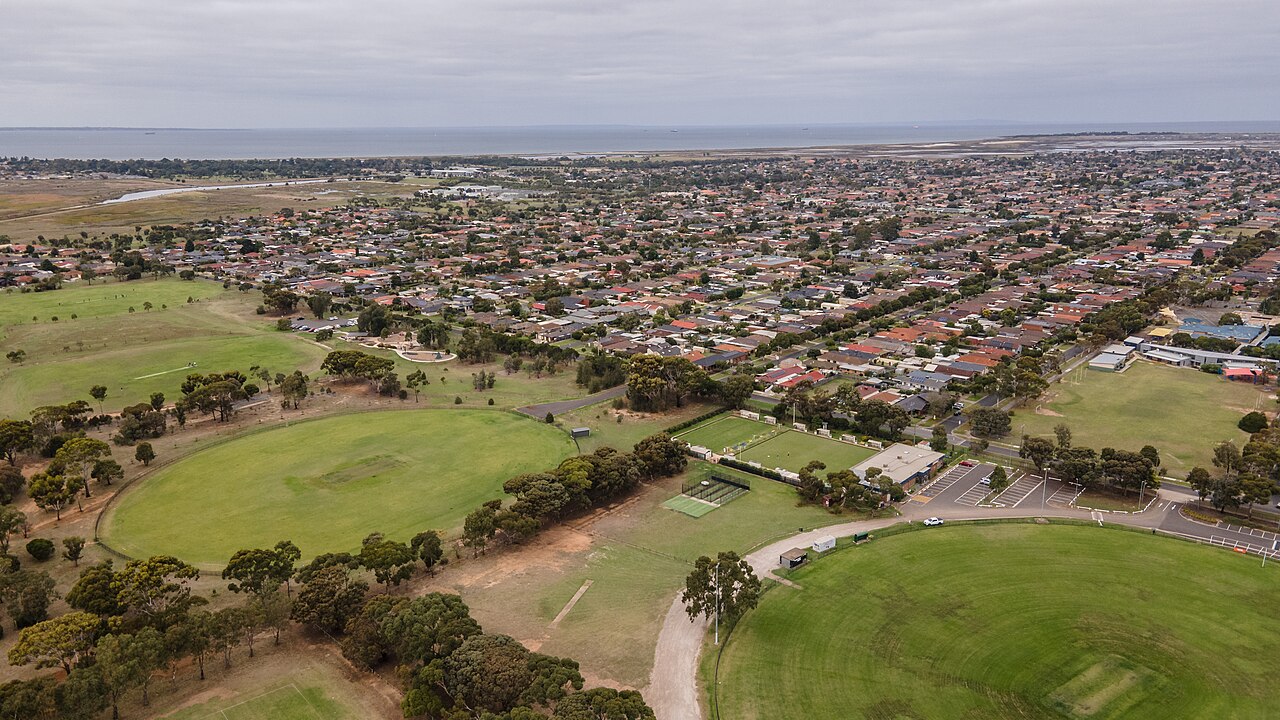
Verdict Box
Best for: commuters who want a Werribee-line station, freeway access, a full-size Woolworths, and quiet streets without pretending this is an inner-west food crawl. Skip if: you need walk-up nightlife, old strip-shop texture, or a suburb where every errand can be done without checking the traffic first. Rent pressure: awkward. One-bedders are thin, family houses move fast, and renters often compare Williams Landing against Point Cook, Laverton, Hoppers Crossing, and Truganina in the same weekend. Commute reality: the station is the whole point, but Palmers Road and the freeway ramps punish lazy timing. Miss the right window and your “easy” commute becomes a queue. Food scene: practical, not romantic. The Jolly Miller Cafe, Flames, Oporto, Woolworths, and a few quick-hit options do daily work; serious eating usually means Point Cook, Werribee, or Altona. Family fit: good for school-run households, drivers, and people who like newer estates. Overall score: 7/10 if you use the station properly; 5.5/10 if you expect a self-contained village.
At-a-Glance Table
| Factor | Williams Landing 2026 |
|---|---|
| LGA | Wyndham City Council |
| Postcode | 3027 |
| Geographic tier | West |
| Region | outer-west |
| Transport grade | B+ |
| Overall grade | A |
Who It Suits
Priya, 34, hybrid analyst — wants Zone 2 train access, a clean supermarket run, and a house that does not need renovation every Saturday. The Two-Car Family — uses Williams Landing as a launchpad to Point Cook, Tarneit, Werribee, and the CBD without pretending the suburb is walkable everywhere. Sam, 29, airport-shift commuter — values freeway access, late Woolworths hours, and predictable takeaway more than late-night bars.
Rent & Property Reality
Median 1BR rent: about $315 a week, with a rough YoY lift around 5% in the local 2026 rental read. Treat that number carefully: Williams Landing is not packed with one-bedroom apartments, and the live rental portals can show a very thin sample. Domain’s live Williams Landing rental page currently shows the problem in plain sight: plenty of family houses and townhouses, but the one-bed unit median is too sparse to display cleanly, so cross-check stock on Domain before you build a budget around any single median.
What that means in normal renter language: the cheap-looking one-bed figure is not the full story. If you actually need a one-bed, you are mostly competing for newer apartments around the town centre and station side of Williams Landing, especially around Clark Street, Overton Road, and the blocks within a realistic walk of Palmers Road. There just are not endless small flats sitting empty. A couple or solo renter who misses a suitable listing may end up looking at Laverton, Hoppers Crossing, Altona Meadows, or Point Cook instead.
The bigger rental market here is family-shaped. Domain’s live data is much clearer for houses: three-bedroom houses sit around the mid-$500s per week, four-bedroom houses around the $600 mark, and five-bedroom homes push higher. That is the real Williams Landing pressure point: households paying for newer builds, double garages, extra bedrooms, and station/freeway convenience.
Do not judge affordability by postcode alone. A house 20 minutes’ walk from the station can be cheaper on paper than a tighter place near Clark Street, but if you then need two cars, paid station parking, more fuel, and more takeaway because the evening commute is shot, the gap shrinks. Also check heating and cooling properly. Newer estates can still run hot in summer because street trees are young, shade is patchy, and west-facing rooms get punished after 3 pm. The rent number is only the headline; the weekly cost is transport plus utilities plus how often you give up and buy dinner.
Local Reality & Pockets
Williams Landing works best when you pick your pocket around the routine you actually live, not the brochure map. If the train is your anchor, favour the town centre and station-side streets near Clark Street, Kendall Street, Overton Road, and Palmers Road. They are not charming in an old-suburb way, but they make the weekday math easier: station, Woolworths, chemist-style errands, cafe, and takeaway all sit closer together. If you are walking in work shoes or pushing a pram, shaving 12 minutes off the station approach matters more than having a slightly bigger spare room.
If you drive most days, the quieter residential streets off Forsyth Road, Sayers Road, and the internal estate roads can feel calmer, but you need to test the actual turn you will use in the morning. Palmers Road is the pressure valve. It carries station traffic, bus traffic, school-run traffic, and freeway traffic, so a place that looks relaxed at 11 am can feel boxed in at 8:05 am. The Princes Freeway access is genuinely useful, but the ramps are not magic. A minor crash, wet morning, or school-term surge can turn “I’m five minutes from the freeway” into “I am staring at brake lights near the interchange.”
Noise is pocket-by-pocket. Near the freeway and Palmers Road you get tyre hiss, truck movement, and the steady background thrum that newer windows partly hide but balconies do not. Closer to the station, you trade backyard quiet for train, bus, and car-park movement. Deeper estate streets are calmer, but then the walk to the station becomes the thing you start bargaining with yourself about in winter rain.
Two Williams Landing gotchas catch newcomers. First: parking feels abundant until everyone wants the same space at the same hour. Around the shopping centre and station, short errands are fine, but commuter timing changes everything. Second: this is a wind-and-heat suburb. Open streets, young canopy, wide roads, and exposed car parks mean summer afternoons feel harsher than the map suggests. The smart routine is early supermarket run, station drop-off before the squeeze, and takeaway decisions before the post-work traffic stacks up.
Signature Craving
The honest craving here is not a 14-course discovery menu. It is the first-month “I cannot cook tonight and I still need to be functional tomorrow” feed. The Jolly Miller Cafe at 100 Overton Road is the suburb’s safer daytime anchor: coffee, breakfast, a sit-down reset, and the kind of place you use when the station run or Woolworths trip has already dragged you into the town centre. Flames, also at 100 Overton Road, covers the fast-food fallback when dinner planning collapses. Oporto at 4 Gadwell Crescent is the car-based option when you are moving along the edge of the suburb rather than parking at the centre. The move is simple: use Williams Landing for convenience, not culinary ego. For a bigger dinner choice, locals usually widen the map to Point Cook, Werribee, or Altona instead of forcing the suburb to be what it is not.
Comparisons Table
| Suburb | Transport | Tier | Region |
|---|---|---|---|
| Williams Landing | B+ | West | outer-west |
| Cocoroc | N/A | West | outer-west |
| Hoppers Crossing | C+ | West | outer-west |
| Laverton | N/A | West | outer-west |
Trust Block
Author: Dani Reyes — Melbourne food writer covering suburb-by-suburb honest eats. Pays her own bills.
Data: data/melbourne_suburbs_master.json (Codex per-LGA enumeration, cross-checked vs VEC + Australia Post + ABS SA2 boundaries), data/suburb_scores.json (composite percentile grades), data/venues/.json (OpenStreetMap + Gemini-verified venue catalog).
Last reviewed: 2026-05-26. Not financial advice. We do not accept paid placements in editorial.
FAQ
Q: Is Williams Landing actually walkable in the first month, or do I need a car? A: You can live a semi-walkable life only if you choose the right pocket. The town centre and station-side blocks around Overton Road, Clark Street, Kendall Street, and Palmers Road are the practical zones for walking to groceries, coffee, buses, and the Werribee line. Deeper residential streets feel calm, but the walk to the station or shops can become annoying fast, especially with wind, rain, heat, or kids. Most households still behave like car households, even if one person catches the train.
Q: Which station should I use from Williams Landing? A: Williams Landing station is the default and the main reason many people rent or buy here. It sits on the Werribee line and connects with several bus routes serving Tarneit, Werribee, Point Cook, and Saltwater Coast. The catch is access. If you live close enough to walk or cycle, it is far more useful than if you need to drive and fight the commuter crush. Some people near the edges compare Aircraft or Laverton, but for most Williams Landing addresses the local station is the routine anchor.
Q: What are the main bus routes a newcomer should know? A: The useful bus map starts at Williams Landing station. Routes commonly associated with the hub include 150 toward Tarneit, 151 toward Tarneit via Westmeadows Lane, 153 toward Werribee via Princes Highway, and the Point Cook-side routes 494, 495, and 497. These matter if you are trying to avoid a second car, but do not assume bus frequency will feel like inner Melbourne. Check the PTV app at the exact time you travel, especially after school, late evening, weekends, and during train disruptions.
Q: Where do locals actually shop for groceries and basics? A: Williams Landing Shopping Centre on Overton Road is the everyday base, mainly because the Woolworths trades long hours and sits close to the station-town-centre cluster. It works for normal groceries, quick pharmacy-style errands, takeaway, cafe stops, and top-up shopping. For bigger specialty runs, many locals widen the loop to Point Cook, Hoppers Crossing, Werribee, or Altona Gate depending on what they need. The first-month mistake is trying to make every errand local; the better move is to split quick basics locally and bulk or specialty shopping elsewhere.
Q: What parking traps should I watch for? A: Do not confuse big roads and open-looking car parks with stress-free parking. Around the shopping centre, short visits are usually manageable, but the station side changes character during commuter peaks. Paid and time-limited options can shift the cost-benefit of driving to the train, and informal habits are not a plan. Always read signs near the station, shopping centre, and apartment blocks rather than copying what the next car does. In residential streets, check garage access and visitor parking before signing a lease, especially in townhouse rows.
Q: What is the Williams Landing traffic pattern by hour? A: Before 7 am, the suburb is at its easiest unless there has been a freeway incident. From about 7:15 to 9 am, Palmers Road, station approaches, school-run movements, and Princes Freeway ramps become the pain points. Late morning is the calmest window for shopping and appointments. From 3 pm, school and local errands start feeding back in. From 5 to 6:45 pm, the return commute can make small mistakes expensive, especially near freeway access and the station. Wet weather makes every bad habit more obvious.
Q: Is Williams Landing noisy? A: It depends which noise you are sensitive to. Near the Princes Freeway and Palmers Road, expect road noise, truck movement, and a constant low traffic sound that is more noticeable outdoors or with windows open. Around the station and town centre, the noise is less freeway roar and more buses, cars, doors, deliveries, and people moving through. Deeper estate streets are quieter, but even there wind can carry sound across open roads. Inspect at 7:45 am and after 5:30 pm, not just on a sunny Saturday.
Q: What are the three routines locals learn quickly? A: First, do the Woolworths and basic errand run outside the after-work crush, because a ten-minute shop can become a parking-and-traffic chore. Second, time the station trip properly: walking or cycling can beat driving once parking and exit delays are included. Third, keep a takeaway hierarchy rather than debating dinner at 6:20 pm. The Jolly Miller Cafe handles the daytime reset, Flames covers a fast local fallback, and Oporto works when you are already moving by car near Gadwell Crescent.
Q: What council quirks matter in Williams Landing? A: Williams Landing sits in Wyndham City, so local-law basics matter more than newcomers expect: bins, nature strips, noise, abandoned vehicles, skips, smoke, and parking rules are council territory. The suburb has many newer homes, townhouses, narrow frontages, and car-dependent households, so bin placement, trailer storage, visitor parking, and hard rubbish habits can create friction quickly. If you are renting a townhouse or apartment, read both the lease and owners-corporation rules. The practical rule is simple: do not assume a wide-looking street means you can store everything outside.