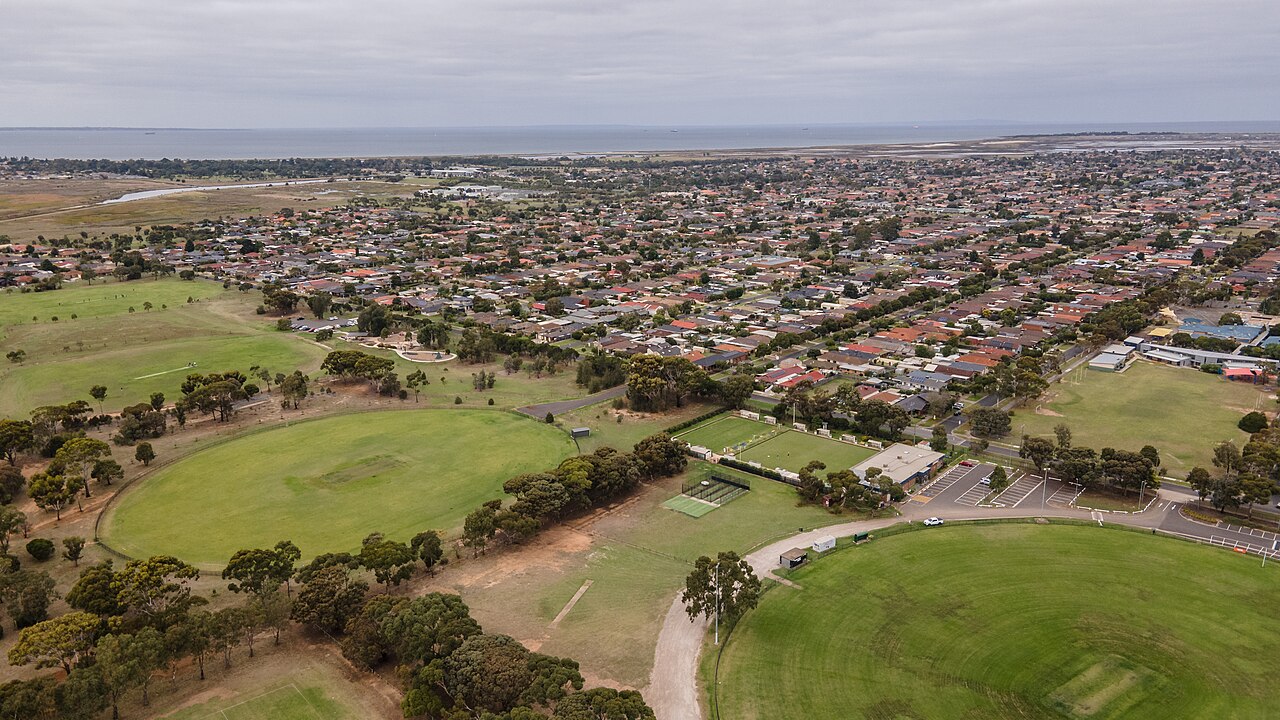
Verdict Box
Best for: station-first renters, airport-west workers, and families who want a newer house without paying Point Cook waterfront money. Skip if: you want a walkable cafe strip, late-night choice, old-school street character, or a commute that does not depend on one rail line and the Princes Freeway behaving. Rent pressure: family homes are the real contest. One-bedroom stock is thin enough that the “median” can wobble with a single listing. Commute reality: Williams Landing station is the suburb’s spine, but parking, peak crowds, and freeway spillover are the tax you pay for the location. Food scene: useful, not deep. The Jolly Miller Cafe, Flames, and Oporto cover the basics around Overton Road and Gadwell Crescent, but you will still drive for range. Family fit: strong for newer homes, garages, schools nearby, and planned estates; weaker for teens who want independence without lifts. Overall score: 7/10 if the station is your anchor, 5.5/10 if you expected a finished town centre.
At-a-Glance Table
| Factor | Williams Landing 2026 |
|---|---|
| LGA | Wyndham City Council |
| Postcode | 3027 |
| Geographic tier | West |
| Region | outer-west |
| Transport grade | B+ |
| Overall grade | A |
Who It Suits
Priya, 34, rail commuter — wants a newer townhouse and can live with a practical, station-led routine. The Two-Car Family — needs bedrooms, garage space, and freeway access more than a charming main street. Sam, 29, rent-stretched professional — can handle a compact apartment if the weekly number beats inner-west alternatives.
Rent & Property Reality
Median 1BR rent: treat $455 per week as the live May 2026 Williams Landing marker, with YoY change effectively not reliable enough to publish as a clean suburb median because Domain shows only one in-suburb 1-bedroom unit in its median table. The useful source is the current Domain Williams Landing rental page, which lists 1-bed unit median data as unavailable because the sample is too small, while its 1-bedroom apartment search shows a Williams Landing apartment at $455 per week. That is the honest read: the number exists in the market, but the market is too thin to pretend it behaves like Richmond, Southbank, or Footscray.
For a renter, this means two things. First, do not build your budget around a neat suburb-average 1-bedroom figure. Williams Landing is mainly a family-house and townhouse suburb, so the entry-level rental pool is narrow and can swing hard depending on whether a Clark Street apartment, an Overton Road compact place, or a room-style listing nearby happens to be available that week. One listing can make the suburb look cheaper or dearer than it really feels on the ground.
Second, $455 per week is not “cheap outer-west” money once you add the living pattern. You may save against inner Melbourne, but you are likely paying for a car, fuel, insurance, station parking stress, toll decisions, and extra trips to Point Cook, Hoppers Crossing, or Werribee for services that are not on your doorstep. If you work near the station end and can walk to Williams Landing station, the rent can make sense. If you are deep in a pocket where every errand starts with a car, the saving gets eaten quietly.
For couples, the better play is often a 2-bedroom apartment or townhouse if the weekly jump is modest, because working from home in a one-bed here can feel oddly isolated: not inner-city compact, not fully suburban spacious. For singles, inspect fast, ask about heating and cooling costs, and check whether the advertised car space is genuinely usable. The rent number is only half the story; in Williams Landing, the transport friction is the second rent.
Local Reality & Pockets
Favour the station-side pockets around Clark Street, Overton Road, and the town centre side of Williams Landing Boulevard if you are renting for convenience. That is where the suburb makes the most sense: you can get to the train, grab coffee at The Jolly Miller Cafe, pick up quick food near Overton Road, and avoid turning every weekday into a driving exercise. Apartments around Clark Street are not romantic, but they are practical. For a move-in checklist, that matters more than brochure language.
If you are looking at houses, streets such as Fantail Crescent, Urban Drive, Rothbury Parkway, and the quieter internal estate roads can work well for families who want garages, newer floorplans, and a calmer evening feel. The trade-off is that some of these pockets are not naturally walkable. Check the actual walk to the station, not the straight-line map distance. A place that looks “near Williams Landing station” can still be an awkward trudge across wide roads, exposed paths, or car-heavy intersections.
Be cautious close to Palmers Road, Sayers Road approaches, and the busier feeder roads around the freeway side. Noise is not always dramatic during a 10-minute inspection, but the rhythm changes in peak hour. You want to listen for truck movement, tyre hum, and the way traffic backs up when people are trying to reach the Princes Freeway. Parking is the other quiet gotcha: many newer homes have garages that are used for storage, narrow streets fill quickly, and visitor parking can become a neighbourly negotiation.
Two honest gotchas: first, the suburb feels more complete on a map than it does in daily life. You have basics, but not the density of services that lets you improvise without planning. Second, public transport is good only if your life aligns with the rail line. Miss that alignment and you are back in car suburb mode, with school runs, supermarket trips, medical appointments, and takeaway all competing for the same road network.
Signature Craving
Williams Landing’s signature craving is not a destination dinner; it is the practical feed you grab when the station, commute, and unpacked boxes have already taken your patience. The Jolly Miller Cafe at 100 Overton Road is the suburb’s safest move-in-day anchor: coffee, breakfast, and a familiar menu without pretending the area has a deep dining scene. Flames, also at 100 Overton Road, covers the kebab-and-chicken lane when you want something fast and salty. Oporto at 4 Gadwell Crescent is exactly what it sounds like: useful, predictable, and better judged as infrastructure than cuisine. The honest verdict is that Williams Landing is a convenience-food suburb first. If you need a proper Saturday-night food crawl, you are driving out. If you need caffeine, a quick bite, and no drama between lease signing and box cutting, Overton Road does the job.
Comparisons Table
| Suburb | Transport | Tier | Region |
|---|---|---|---|
| Williams Landing | B+ | West | outer-west |
| Cocoroc | N/A | West | outer-west |
| Hoppers Crossing | C+ | West | outer-west |
| Laverton | N/A | West | outer-west |
Trust Block
Author: Marcus Cole — Long-time Melbourne local who eats his way through the inner-east. Property cynic.
Data: data/melbourne_suburbs_master.json (Codex per-LGA enumeration, cross-checked vs VEC + Australia Post + ABS SA2 boundaries), data/suburb_scores.json (composite percentile grades), data/venues/.json (OpenStreetMap + Gemini-verified venue catalog).
Last reviewed: 2026-05-26. Not financial advice. We do not accept paid placements in editorial.
FAQ
Q: Is Williams Landing a good suburb for moving quickly in 2026? A: Yes, if your move is logistics-first rather than lifestyle-first. Williams Landing has newer housing stock, garages, station access, and enough everyday services to get settled without learning an old suburb’s quirks. The catch is that rentals can move quickly in the family-home bracket, and one-bedroom options are thin. Before applying, confirm the real walk or drive to Williams Landing station, check garage usability, and test the peak-hour route to your workplace. The suburb rewards organised movers, not people hoping to improvise everything after they arrive.
Q: Do I need a car in Williams Landing? A: Most households will want at least one car. Williams Landing station is the suburb’s biggest advantage, and station-side renters can build a decent weekday routine around the train. But groceries, appointments, school activities, weekend sport, and better food options often push you toward driving. If you rent near Clark Street, Overton Road, or Williams Landing Boulevard, you can reduce car dependence. If you choose a quieter internal estate pocket, assume the car becomes part of the weekly budget, not an optional extra.
Q: Which pockets should renters inspect first? A: Start with the station and town-centre side: Clark Street, Overton Road, and the more connected parts of Williams Landing Boulevard. Those addresses suit renters who care about commuting, coffee, and basic convenience. Families wanting more space can look deeper into estate streets such as Fantail Crescent, Urban Drive, and Rothbury Parkway, but should test school-run traffic and parking at inspection time. Do not rely on map distance alone. In Williams Landing, a place can look close to everything and still feel awkward on foot.
Q: What is the biggest moving mistake people make here? A: The biggest mistake is renting the floorplan without testing the daily routine. A four-bedroom house can look excellent online, but if the garage is tight, street parking is already crowded, and the station run is annoying, the house starts costing you time every day. Inspect during or near peak hour if possible. Drive the route to the freeway, look at bin-day street width, check where guests would park, and stand outside long enough to hear traffic patterns. The suburb is practical, but only when the micro-location works.
Q: Is Williams Landing better for families or singles? A: It is structurally better for families and couples than for singles chasing atmosphere. The housing stock, road layout, garages, and estate planning all lean toward households that need bedrooms and car space. Singles can still make it work, especially near the station, but the social and food scene is limited compared with inner and middle-ring suburbs. If your life is work, gym, train, and quiet evenings, it can be sensible. If you want casual nightlife, dense dining, and spontaneous plans, you will probably feel the distance.
Q: How bad is the commute from Williams Landing? A: The commute is manageable when the train line is running cleanly and your home is genuinely close to Williams Landing station. It becomes more frustrating when you add station parking, feeder-road congestion, or a freeway drive at the wrong time. The Princes Freeway can turn a reasonable western-suburbs location into a slow crawl, especially around peak periods and incidents. The smart move is to time your inspection around your real commute window. A Saturday viewing tells you almost nothing about Tuesday morning.
Q: What should I check before signing a lease? A: Check heating and cooling carefully, because newer-looking homes are not automatically cheap to run. Confirm whether the garage fits your actual car, whether the driveway blocks footpath movement, and whether visitor parking exists beyond wishful thinking. For apartments, ask about body corporate rules, parcel delivery, lift reliability, and noise between units. For houses, look for drainage, fence condition, flyscreens, security doors, and NBN status. Also check the bond, lease start date, and condition report photos slowly; moving fast should not mean accepting vague documentation.
Q: Is the food scene good enough for everyday life? A: Good enough for basics, not good enough to be the reason you move here. The Jolly Miller Cafe on Overton Road gives you a reliable coffee-and-brunch option, Flames covers kebab and chicken cravings, and Oporto on Gadwell Crescent is useful when you want something predictable. That is a functional setup for move-in week and tired weeknights. But if food is part of your identity, you will be driving to Point Cook, Hoppers Crossing, Werribee, or further in. Williams Landing feeds you; it does not entertain you.
Q: What is the honest verdict for renters in 2026? A: Williams Landing is a rational rental choice, not an emotional one. You move here for a newer dwelling, rail access, freeway reach, and a more manageable western-suburbs price point than many better-known areas. You do not move here for street life, food depth, or architectural character. The suburb works best when you choose a pocket that matches your commute and accept the car-based parts upfront. If you treat it as a practical base, it can be a solid move. If you expect charm, you will be annoyed quickly.