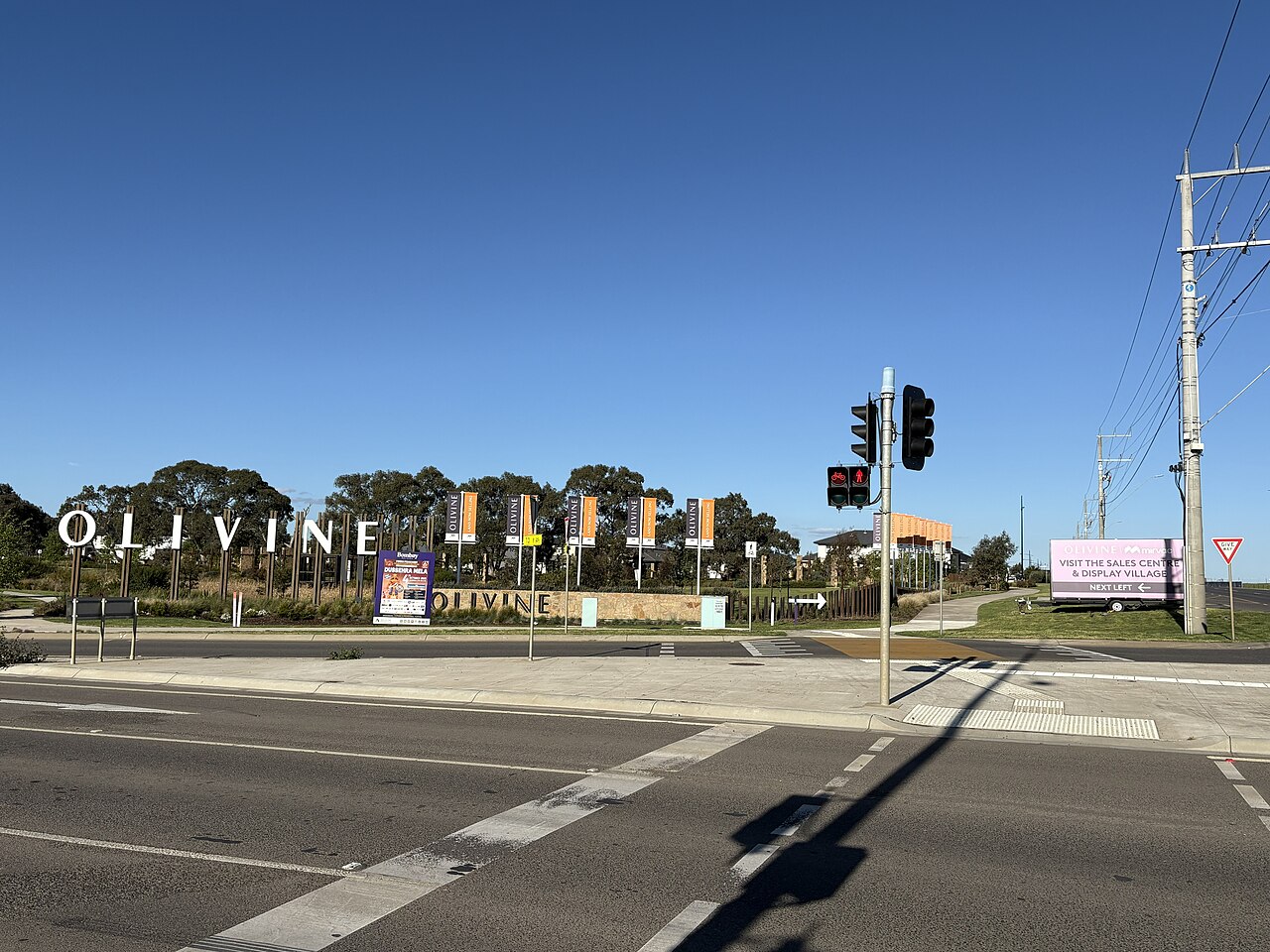
Verdict Box
Best for — buyers who want a newer house, a garage, and northern growth-corridor pricing without pretending they bought Thornbury. Skip if — your life depends on spontaneous trains, late-night food, walkable errands, or a calm school-run. Rent pressure — published 1-bedroom data is thin; the real market is 3-4 bedroom houses and townhouses, with REA showing Wollert house rent around $560 a week and 4-bedders closer to $595. Commute reality — the suburb is car-first. Epping Station helps, but you still have to reach it, park near it, or wait for a bus. Food scene — usable, not deep: Steen Avenue and Macedon Parade do the local lifting. Family fit — strong on new schools and space, weaker on established shade, mature shopping strips, and transport redundancy. Overall score — 6.7/10: good value if you accept the trade; punishing if you believed the estate brochure.
At-a-Glance Table
| Factor | Wollert 2026 |
|---|---|
| LGA | Whittlesea City Council |
| Postcode | 3750 |
| Geographic tier | North |
| Region | outer-north |
| Transport grade | F |
| Overall grade | F |
Who It Suits
The Two-Car Family — needs four bedrooms, school proximity, and accepts that most errands are driven. The First-Home Realist — wants a newer build and will trade commute comfort for a lower buy-in than inner north suburbs. The Hybrid Worker — can survive Wollert because the city commute is occasional, not a five-day punishment.
Rent & Property Reality
The honest 1-bedroom rent number for Wollert in 2026 is this: the major portals do not publish a reliable Wollert 1-bedroom median because the sample is too thin; the closest useful rental benchmark is the unit median of $495 per week, down 1% year-on-year, and the house median of $560 per week, down 3%, as shown by REA’s Wollert rental market data. That matters more than a neat studio figure, because Wollert is not really a 1-bedroom renter’s suburb. It is a detached-house and townhouse suburb with spare rooms, double garages, prams in hallways, and households stretching for a newer place on the city fringe.
If you are hunting for a genuine 1-bedroom apartment, Wollert will feel oddly empty. You may see studios, granny-flat style listings, or nearby options in Epping, Craigieburn, Mickleham, or South Morang before you find a normal apartment market in Wollert itself. That makes price comparison messy. A cheap-looking 1-bed can be cheap because it is not in Wollert proper, has no proper parking, is a studio arrangement, or sits in a new estate where your daily life still needs a car.
For families, the more relevant rent test is the 3-4 bedroom bracket. REA’s snapshot has 3-bedroom houses around $530 per week and 4-bedroom houses around $595 per week. Domain’s live rental pages have also shown Wollert houses clustered around the low-$500s to mid-$600s depending on bedroom count and garage space. That is not bargain-bin Melbourne anymore. It is cheaper than many established middle-ring suburbs, but you are paying for a newer shell in a place where transport, food, trees, and local retail are still catching up.
The marketing spin says affordability. The lived version is more conditional: Wollert can be good value if you actually need the bedrooms and will use the garage. It is poor value if you are single, commuting daily to the CBD, and imagining a walk-to-everything life. In that case, the rent saving can disappear into fuel, station parking stress, tolls, rideshares, and time you do not get back.
Local Reality & Pockets
Favour the pockets that reduce your dependence on one road. Around Macedon Parade, Steen Avenue, and the Edgars Road side, you get the clearest access to local schools, the small food strip, buses, and the Epping side of the suburb. It is still not inner-suburban walkability, but at least you are not trapped deep inside an estate every time you need milk, a coffee, or a school pickup. Streets near Saltlake Boulevard, Pine Park Drive, and established links toward Epping Road can work well if the actual house has off-street parking and you are not facing a construction lot.
Be more careful in the newer outer pockets pushing toward Craigieburn Road East, Harvest Home Road, and the edges where estates are still filling in. A display-home drive at 11am on a Saturday tells you very little. Come back at 7:45am on a weekday and watch the exits. Wollert’s problem is not that every street is bad; it is that too many trips are funnelled through the same arterial roads before you even reach the bigger network. Craigieburn Road East, Epping Road, Edgars Road, and Bridge Inn Road can all become part of your daily mood.
The first gotcha is parking. Many newer streets look tidy in listing photos because the photos are taken before everyone is home. Once households have two adults, adult children, visitors, work utes, and delivery vans, narrow estate streets get clogged fast. Inspect after 6:30pm, not just at the open. If a house has a single garage being used as storage and a short driveway, assume street parking will be a recurring argument.
The second gotcha is construction hangover. Wollert is still absorbing growth: dust, tradie traffic, temporary fencing, half-finished verges, roadworks, and blocks that become noise sources before they become neighbours. Check what is vacant beside you, behind you, and across the road. A quiet reserve on the brochure may be a drainage corridor, future road link, or land waiting for the next stage. Also inspect mobile reception, NBN type, water pressure upstairs, garage fit for modern cars, and whether the backyard drains properly after rain. Those boring checks matter more here than the stone benchtop.
Signature Craving
Wollert’s food scene is useful rather than deep. The move-in test is whether you can accept a small rotation instead of a long list of proven locals. Staple Pizza at 44 Steen Avenue is the obvious weeknight anchor: close, casual, and exactly the sort of place you end up using when the commute has already taken your patience. Lucky Tasty Food next door at 46 Steen Avenue gives Steen Avenue a bit more practical value, and Rustic Corner Cafe at 115 Macedon Parade is the local coffee-and-brunch option you will learn quickly if you live near the school side. The catch is range. If you want late dinners, serious dining, or a different cuisine every night, you will be driving to Epping, South Morang, or further in. Wollert feeds you; it does not spoil you.
Comparisons Table
| Suburb | Transport | Tier | Region |
|---|---|---|---|
| Wollert | F | North | outer-north |
| Beveridge | F | North | outer-north |
| Bruces Creek | n/a | North | outer-north |
| Donnybrook | N/A | North | outer-north |
Trust Block
Author: Marcus Cole — Long-time Melbourne local who eats his way through the inner-east. Property cynic.
Data: data/melbourne_suburbs_master.json (Codex per-LGA enumeration, cross-checked vs VEC + Australia Post + ABS SA2 boundaries), data/suburb_scores.json (composite percentile grades), data/venues/.json (OpenStreetMap + Gemini-verified venue catalog).
Last reviewed: 2026-05-26. Not financial advice. We do not accept paid placements in editorial.
FAQ
Q: Is Wollert actually affordable in 2026? A: Affordable only if you compare it to established suburbs with older houses and better transport. The rent numbers are no longer soft: REA shows Wollert house rent around $560 per week, with 4-bedroom houses around $595. Buyers can still find more house for the money than in many inner or middle-ring suburbs, but the saving comes with trade-offs. You are buying into a car-dependent growth corridor, not a finished village. Budget for fuel, insurance, possible second-car costs, school-run time, and the fact that many errands still point you back toward Epping or South Morang.
Q: What is the commute from Wollert to the Melbourne CBD really like? A: Treat the CBD commute as a 70-95 minute door-to-door exercise by public transport if you are travelling in peak and do not live right beside a convenient bus. You usually need to get to Epping Station first, then take the Mernda line into the city. Driving can be faster on a clean run, but weekday peaks through Epping Road, Craigieburn Road East, Cooper Street, High Street, or the freeway approaches can turn ugly. Wollert works much better for hybrid workers, northern-suburbs jobs, trades, airport-adjacent work, or households where only one person does the city run.
Q: Which Wollert pockets should I favour when inspecting? A: Start with access, not facade. Pockets near Macedon Parade, Steen Avenue, Edgars Road, and the school cluster generally make daily life easier because you are closer to local schools, buses, basic food, and the Epping side of the suburb. Streets with clean links to Epping Road, Saltlake Boulevard, and Pine Park Drive can also work if the block has proper parking. Do not just chase the newest estate stage. A slightly less glossy house with a better exit route and usable garage may beat a shiny facade buried deep in a road maze.
Q: Which areas should I be careful with before signing? A: Be careful with outer estate edges where surrounding blocks are still vacant, especially toward Craigieburn Road East, Harvest Home Road, and developing pockets with unfinished verges or active construction nearby. That does not make them bad buys, but it changes the risk profile. You need to know what is planned around the property, where future traffic will flow, and whether today’s quiet street becomes tomorrow’s shortcut. Inspect at school pickup, evening parking time, and after rain. If the only calm inspection was a sunny Saturday morning, you have not really inspected the suburb.
Q: Is Wollert good for schools? A: Wollert is stronger for families than for singles because it has new government school infrastructure, including Edgars Creek Primary School on Macedon Parade, Edgars Creek Secondary College on Steen Avenue, and Wollert Secondary College in the broader suburb. The trade-off is that newer schools and fast growth can mean changing enrolment pressure, zone anxiety, and busy pickup conditions. Do not rely on agent talk about school access. Use the Victorian school zone finder for the exact address, then drive the school route during the morning peak before you commit.
Q: Can you live in Wollert without a car? A: Technically yes, comfortably no for most people. Wollert has bus connections, including services linking toward Epping or Thomastown, but the suburb’s daily rhythm is built around driving. Groceries, appointments, sport, station access, and family logistics are much easier with a car. If you are a one-car household, choose the address very carefully and test the exact bus stop, walking route, lighting, and frequency. If you are car-free and commuting often, Epping, Reservoir, Preston, or other train-adjacent suburbs will probably make more sense despite higher rent.
Q: What are the five inspections people skip and regret? A: First, inspect after 6:30pm to see real parking pressure. Second, inspect at 8am to test the road exits. Third, inspect after rain to check drainage, mud, verge condition, and whether the backyard holds water. Fourth, test mobile reception inside the house, garage, and back room, because new estates can be patchy. Fifth, measure the garage and driveway instead of assuming they fit your cars. Wollert’s newer homes can look easy in photos, but tight streets, storage-filled garages, and short driveways create everyday friction.
Q: Is Wollert better for buying or renting? A: Wollert makes more sense as a buying suburb than a lifestyle rental suburb. Buyers may accept the rough edges because they get a newer home, more bedrooms, and a foothold in a growth area. Renters have to be more clinical. If you are paying close to $600 a week for a 4-bedroom house and still driving everywhere, the value depends on whether you genuinely need the space. A couple or single renter may get a better life by paying similar money for less house but better transport and more established amenities elsewhere.
Q: What do locals usually warn newcomers about? A: They warn you about the roads first, then the parking, then the gap between brochure life and weekday life. Wollert can look simple on a map, but the lived pattern is school traffic, arterial-road dependence, and a lot of short trips that still require the car. Locals also warn newcomers not to assume every promised town centre, road upgrade, or transport improvement will arrive on their personal timeline. Buy or rent based on what exists now: the current bus stop, current school zone, current shops, current road access, and current noise around the block.


